
.svg)





.webp)


Non-financial reporting is now a standard part of annual corporate processes. Although relatively recent, these reports have become significantly more comprehensive over the years and are now highly demanding.
However, they are hard to ignore. Some are mandatory, such as the European CSRD, which takes effect on January 1, 2024, while others are voluntary (CDP, GRI, ISSB) but have become essential due to pressure from numerous stakeholders, starting with clients and investors.
The proliferation of these reports ultimately leads to a proliferation of the associated standards. For CSR departments and CFOs, who are most directly affected, this can quickly become a headache. The differences in data to be collected, reporting formats, and processing requirements demand significant involvement from the teams concerned, and compiling these reports quickly becomes time-consuming.
In recent months, driven by the CSRD, these various reporting standards have tended to converge. Nevertheless, differences persist, often linked to the origin of these reports and/or their ultimate objectives.
To help you see things more clearly, we have created a comparison of various non-financial reporting standards. In this article, you will find a cross-analysis of 4 major international frameworks:
- the CSRD (Corporate Sustainability Reporting Directive)
- the ISSB (International Sustainability Standards Board)
- the CDP (Carbon Disclosure Project)
- the GRI (Global Reporting Initiative)
Different visions and processes
Each non-financial reporting framework has its own set of specific standards:
- ESRS for CSRD
- IFRS S for ISSB
- CDP questionnaires for CDP
- GRI standards for GRI
With the exception of CDP, which operates via a questionnaire-based system, these standards provide a framework for collecting and processing the various data that will make up the sustainability report.
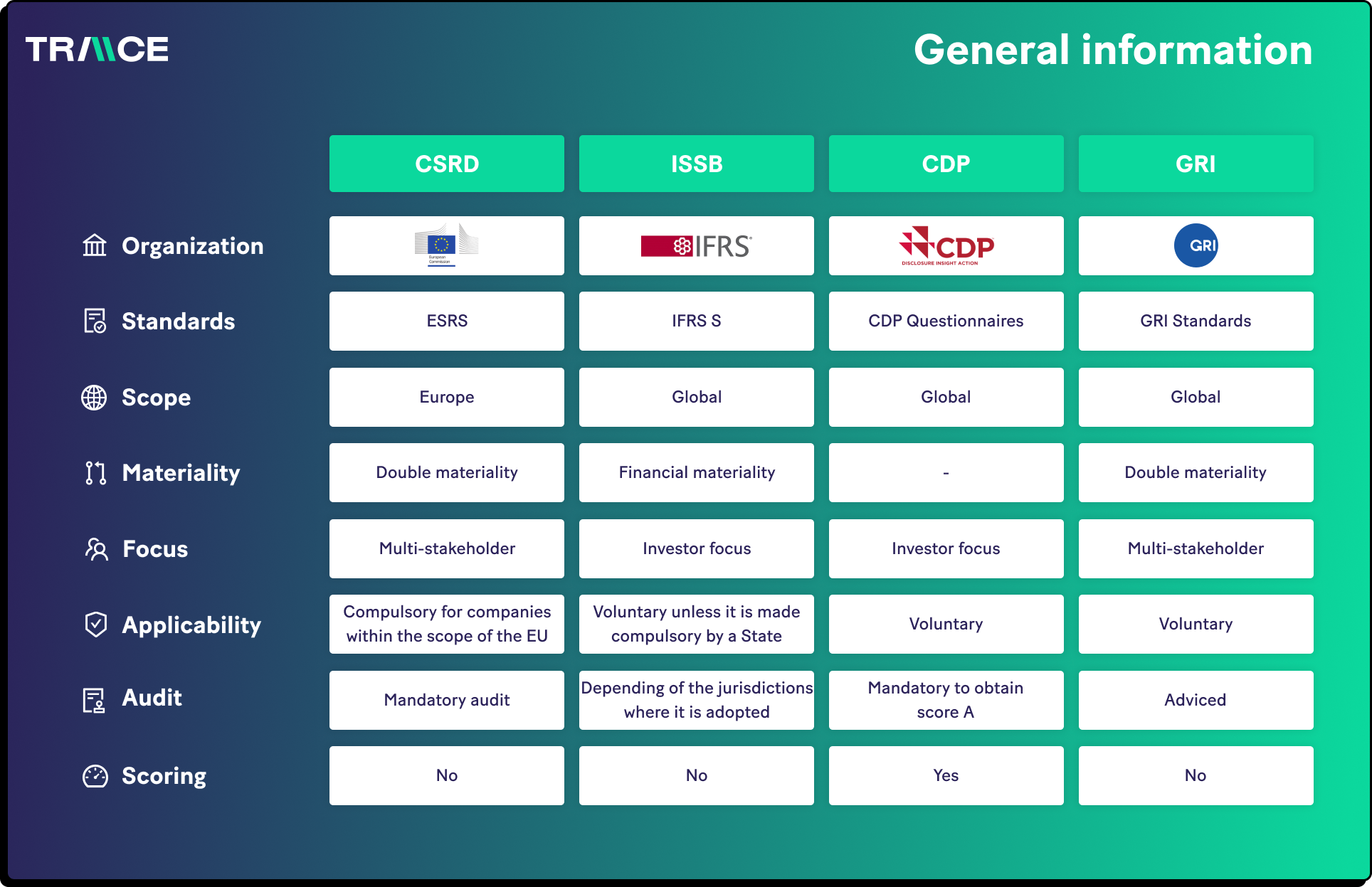
The first question to address is whether these reporting requirements are mandatory or voluntary.
Of the four frameworks analyzed, only CSRD is mandatory for companies within the European Union, as well as for non-EU companies generating a turnover of 150 million euros or more within the EU.
CDP and GRI are completed on a voluntary basis. It should be noted, however, that CDP questionnaire results are regularly scrutinized and even requested by international investors.
ISSB has a more ambivalent position. While it is intended to be completed voluntarily, some countries, such as Brazil and the United Kingdom, have made it mandatory.
Regarding their scope of application, they are recognized internationally. CSRD, however, only applies to the European Union. A European company operating internationally may therefore be required to complete multiple reporting formats.
Another key question is the materiality assessment that must be conducted prior to most reporting with the exception of CDP. While CSRD and GRI require a double materiality assessment, i.e., financial materiality and impact materiality, ISSB only requires a financial materiality assessment.
Finally, one point on which all these standards differ is the auditing of reports published by companies. While it is mandatory under CSRD, it is not always required under ISSB (it depends on the rules established by the countries that have made it mandatory). CDP only makes it mandatory to achieve an A rating in its ranking. For GRI, it is merely recommended.
It should be noted that only CDP offers a four-level classification of companies based on their reporting results.
Varied scopes of application
While climate remains the core element of all these normative frameworks, almost all sustainability reports have expanded their scope to include numerous ESG variables, which are now considered inseparable from environmental issues.
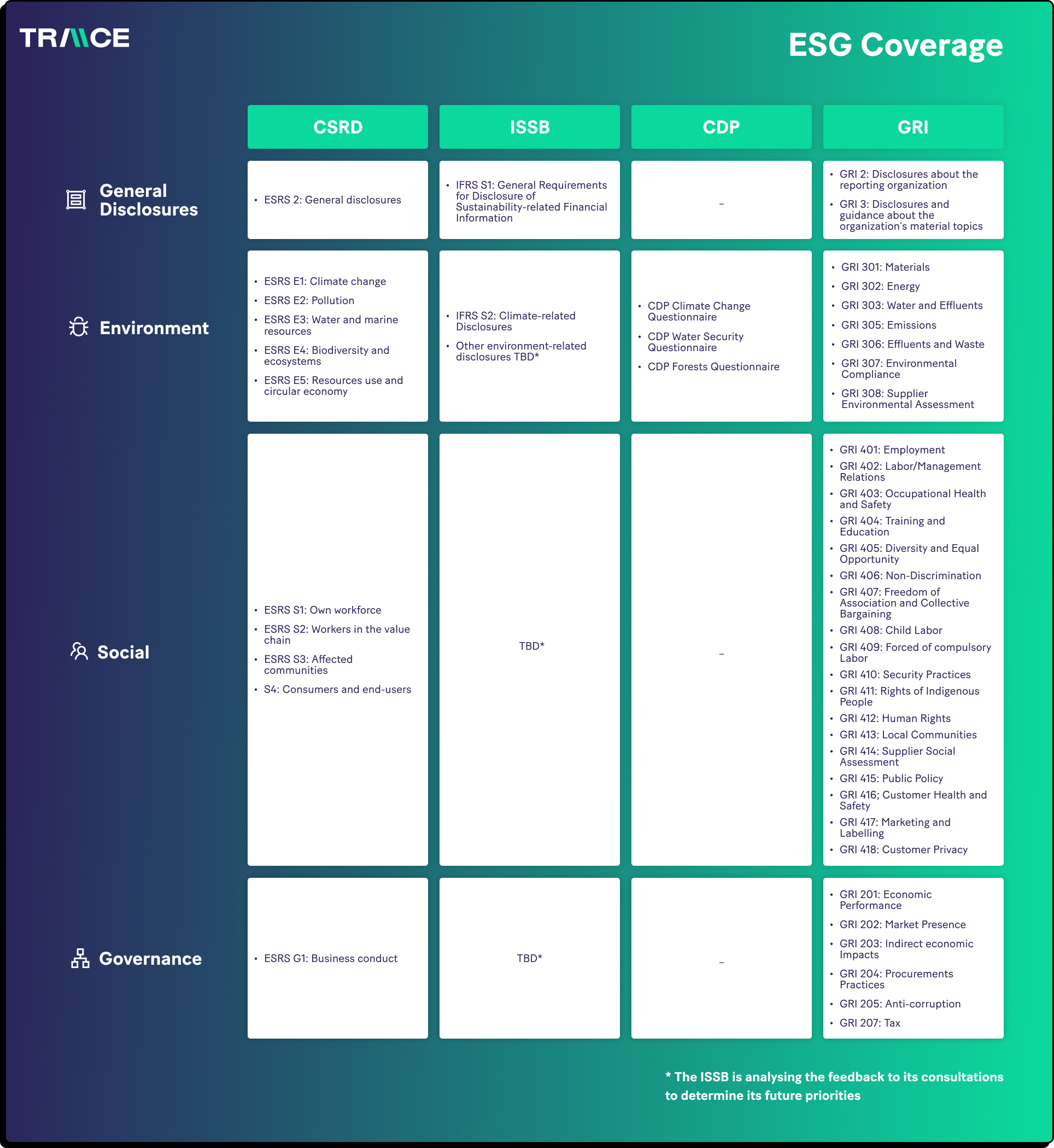
Environmental dimension
All reporting frameworks address the environmental dimension. Some have expanded their analysis to include new topics that go far beyond simple carbon emissions reporting.
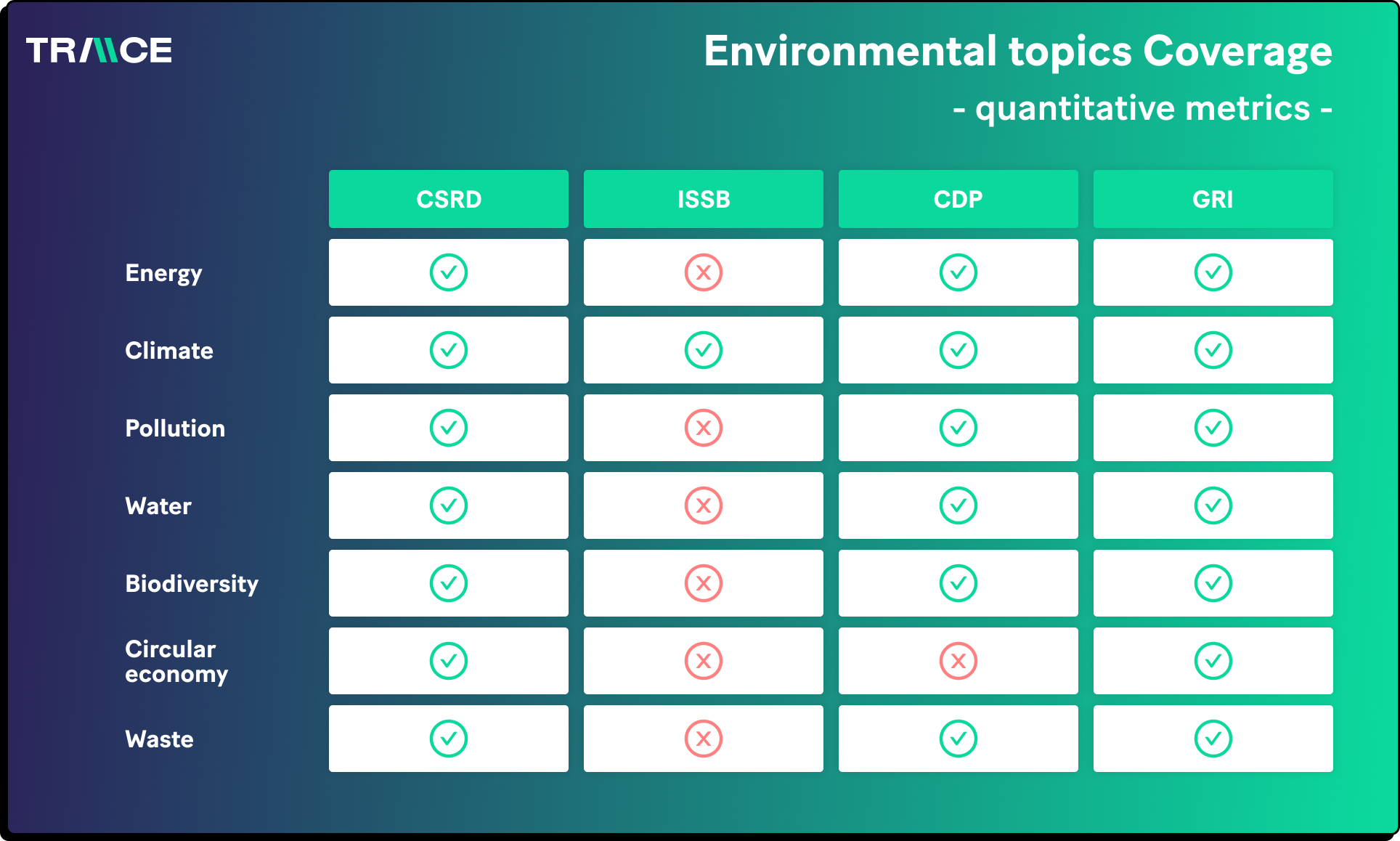
While the ISSB focuses purely on climate, the CSRD, CDP, and GRI have integrated variables that account for the following topics:
- energy
- pollution
- water resources
- biodiversity
- waste management
The CSRD and GRI also include standards addressing corporate commitment to the circular economy.
Social dimension
To date, only the CSRD and GRI include reporting standards that cover social issues. While the ISSB plans to integrate them soon, the CDP does not currently intend to include these elements in its questionnaires.
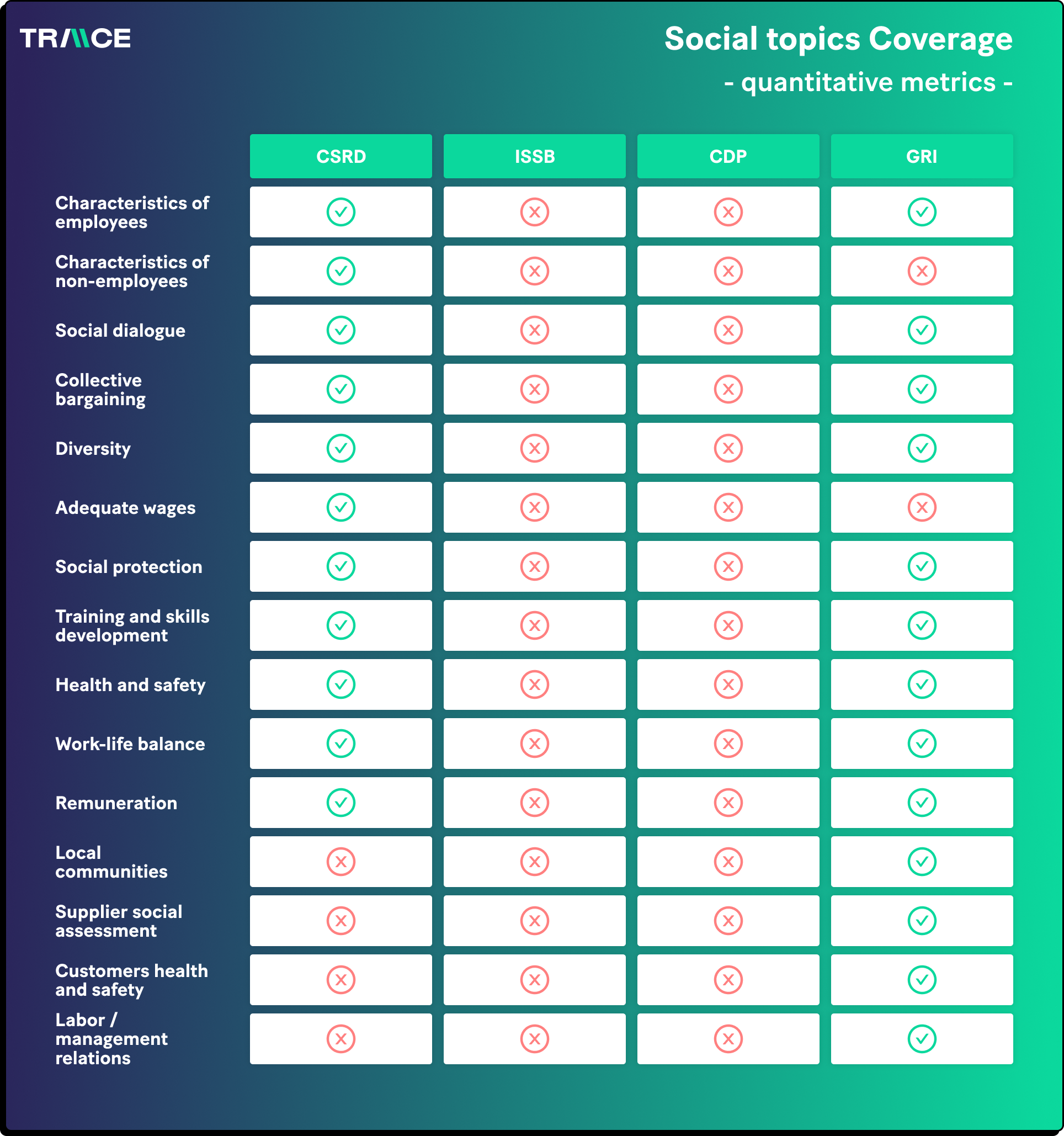
In this area, the GRI covers the widest variety of topics.
Elements covered by both standards include:
- diversity within the company
- management of labor relations
- training policy
- employee social protection
- employee health and safety policy
- …
The difference between the two regulatory frameworks lies in a few criteria external to the company. GRI takes into account the impact of the company's activities on local communities, the social assessment of its suppliers, and consumer health and safety.
Conversely, unlike the CSRD, GRI does not take into account the company's wage policy and its equity.
The governance dimension
As with the social component, governance is a topic addressed only by the CSRD and GRI. The ISSB has also announced that it is working on its integration.
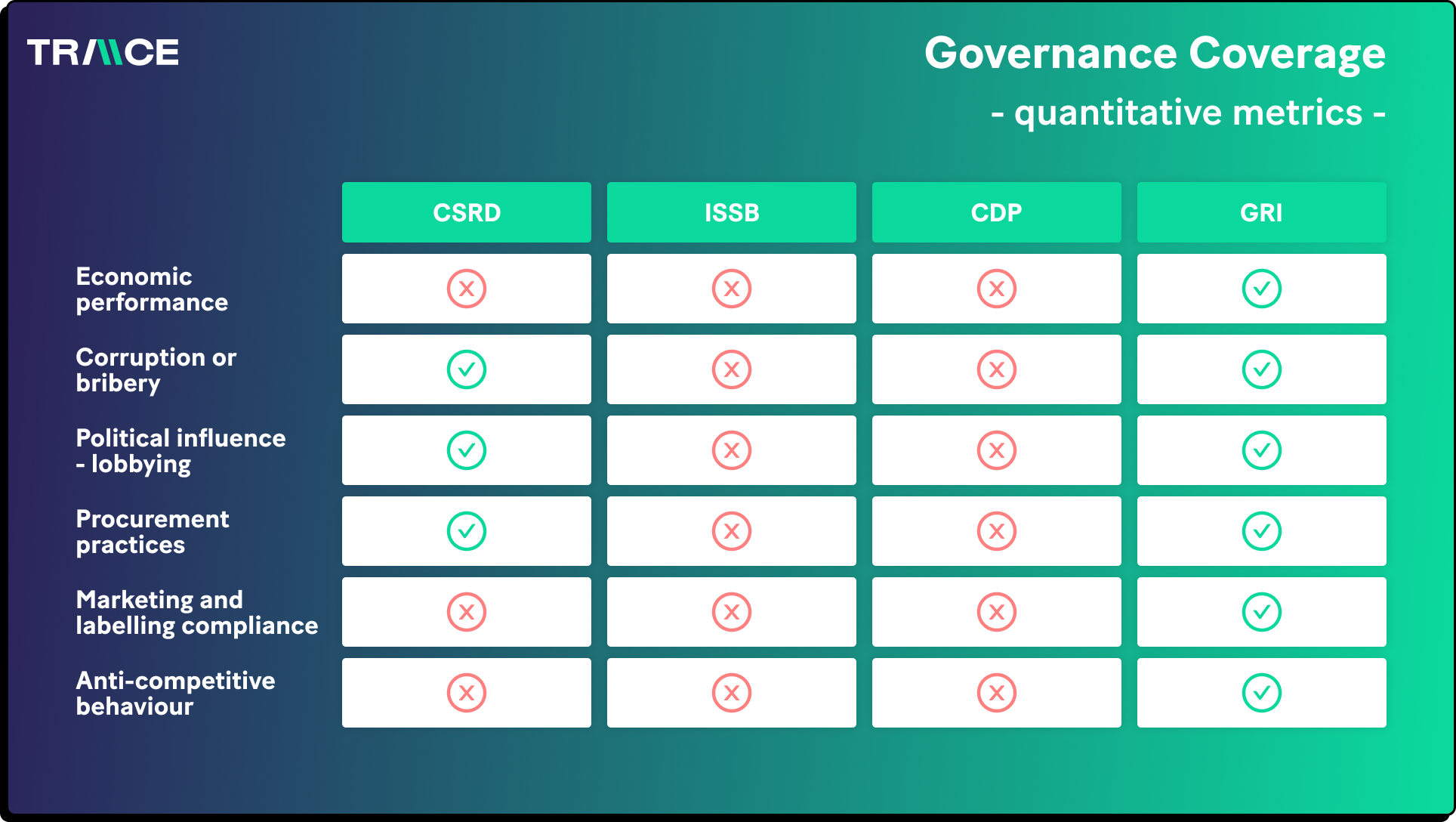
GRI has a very comprehensive set of reporting standards on this aspect. Their standards cover:
- anti-corruption and anti-bribery measures
- lobbying
- the company's procurement policy
- economic performance
- marketing practices and compliance with labels
- anti-competitive behavior
The CSRD, for its part, focuses on the first three topics mentioned.
Analysis of sector-specific features
Each reporting standard has published or plans to publish sector-specific standards aimed at adapting to the specificities inherent to certain business sectors. These sectors are often targeted because they have a significant impact on the climate (transport, agriculture, fossil fuel extraction, etc.).
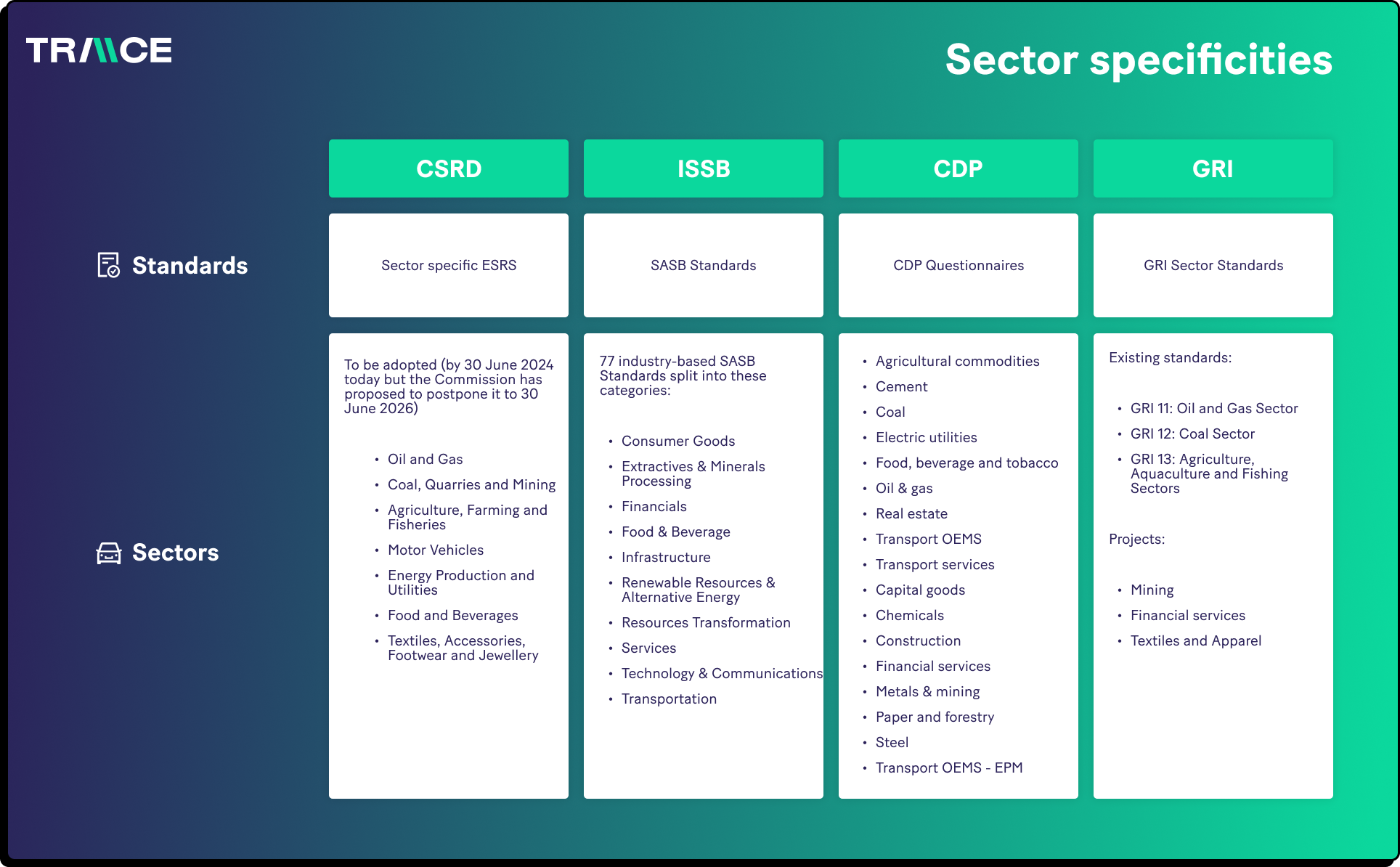
The 77 ISSB SASB standards and the 17 specific CDP questionnaires cover the largest number of sectors to date. GRI has 3 specific sector standards and is currently developing 3 new ones.
Regarding the CSRD, 7 sector-specific ESRS are currently being developed and are expected to be published during 2026.
Towards interoperability of non-financial reporting standards
An increasing number of companies are required to publish one or even several non-financial reports annually. The reasons for this are manifold:
- a strong corporate commitment to environmental and social issues
- pressure from stakeholders: clients, suppliers, investors, etc.
- a binding regulatory framework
The risk posed by the proliferation of reporting standards is that companies may become less committed to the preparation and publication of these reports, opting instead for the bare minimum.
Spending time preparing reports can also detract from the time a company spends addressing the negative impact its activities may have on the various ESG criteria covered in those reports. In such cases, we lose sight of the primary goal of these reports: to raise awareness among companies and encourage them to take climate action.
The organizations responsible for these standards are well aware of these issues and are actively working to make their standards interoperable. The goal is to ensure that companies do not have to duplicate efforts to complete their various non-financial reports, but rather find synergies between them.
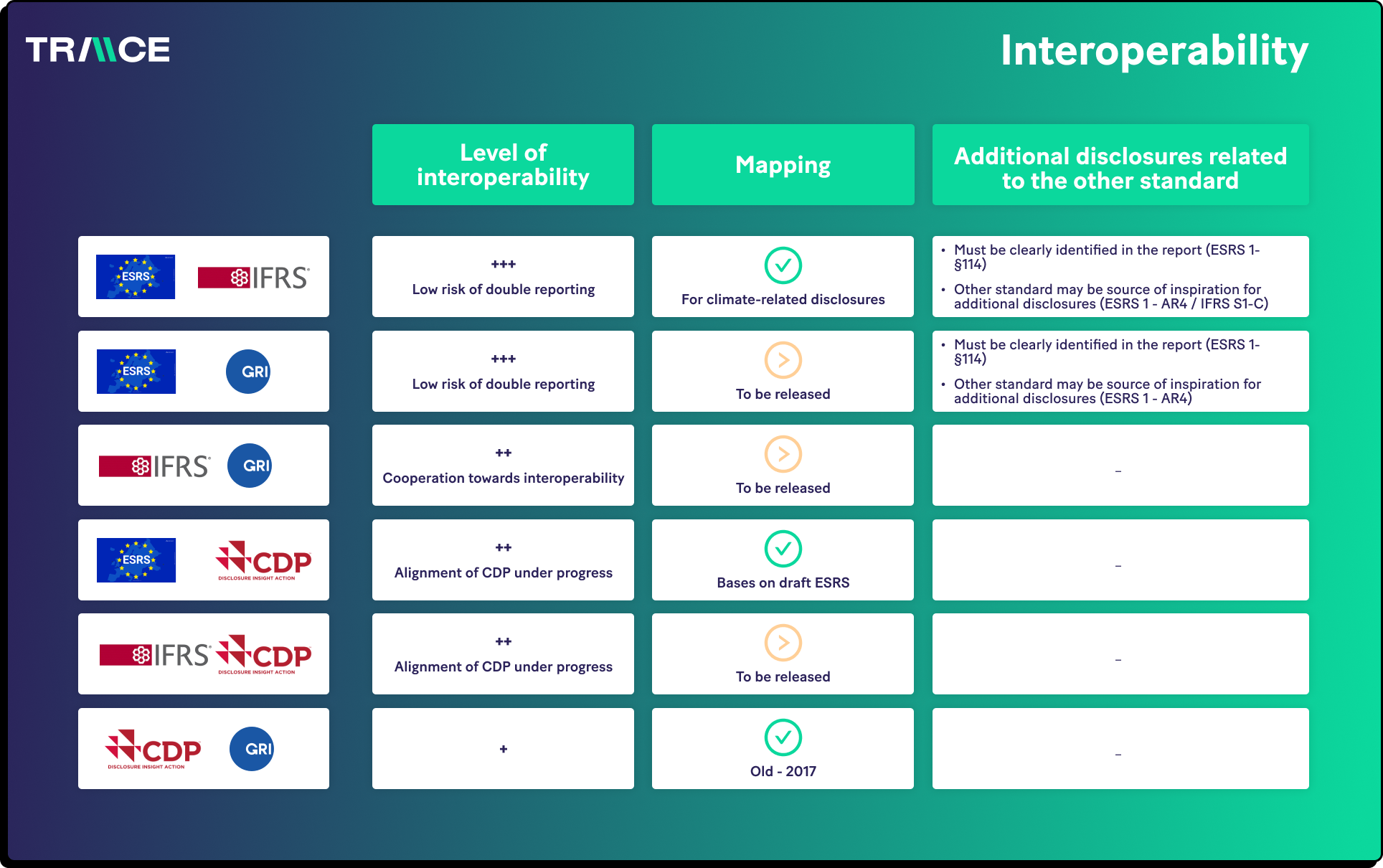
To facilitate this interoperability, mappings are being created to align collected data with the relevant categories in each type of report. This way, you will know that data X, collected under theESRS E1 of the CSRD, will correspond to one or more responses in the CDP questionnaire.
This mapping will also allow the most advanced ESG software to provide you with turnkey reports for each reporting standard by pulling the necessary data for their creation from the information you have already collected.
Furthermore, these various standards are designed to inform one another. For example, ESRS 1 stipulates that companies may draw on the requirements of GRI and ISSB standards if they wish to disclose additional information not required by the ESRS. IFRS S1 has implemented the same mechanism.
In conclusion, most standards are now interoperable, limiting the risk of double reporting. EFRAG, which is in charge of the CSRD's ESRS, has already announced high levels of interoperability with its three counterparts and published indices that map information collected under ESRS to IFRS, CDP questionnaires, and GRI standards. GRI has even gone a step further, explaining that any company disclosing information in the ESRS format is considered to have reported in accordance with GRI (which is not yet the case in reverse). For its part, CDP has announced that it is working on aligning its questionnaire with ESRS and IFRS S.