
.svg)




How a leader in the digital economy leveraged Tennaxia to measure the carbon footprint of its operations and understand the impact of its software products


Leader in analytics solutions for enterprise digital assets
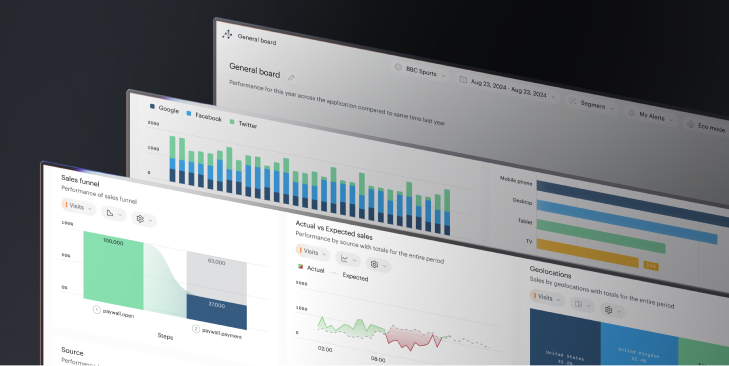
Piano Analytics, formerly known as AT Internet or XiTi, is an advanced performance measurement solution for digital platforms (websites, mobile applications, etc.) designed, developed, and maintained in France for nearly 30 years.
Its mission is to provide its clients with the data and insights needed to make informed decisions and optimize their online revenue and performance.
One of Piano's core values is, and always has been, innovation. The company continuously invests in research and development to offer increasingly advanced solutions tailored to the evolving needs of its clients.
As a major player in the digital ecosystem, Piano is committed to supporting its clients in their transition to an increasingly complex and competitive digital economy.
To truly understand and control its carbon impact, to report on it, take concrete action, and meet commercial and regulatory demands
Addressing climate issues follows the same logic. While digital technology accounts for "only" 4% of global greenhouse gas emissions, the sector's double-digit growth and the advent of AI risk leading to a significant increase in CO2 emissions. As a major SaaS player, Piano quickly understood the need to commit to fighting climate change.
It is with this in mind that Piano chose to partner with Tennaxia to:

Measure and analyze its carbon footprint to better understand the environmental impact of its activities and identify its most significant emission sources.

Identify the main levers for action that will enable it to reduce its carbon footprint and concretely contribute to the fight against climate change.

Meet the increasingly frequent demands of its clients, who are keen to understand the impact of the digital tools they use daily, and also satisfy the environmental criteria of tenders.

Anticipate future environmental regulations to which the company will be subject in the coming years, such as CSRD, and be able to transform this compliance into a competitive advantage, as they successfully did with GDPR.

Enabling precise measurement of the digital carbon footprint, particularly through the faithful integration of the Boavizta method
The goal was to identify emissions generated throughout the product's development and usage chain, specifically:
➡ traffic generated by end-users
➡ cloud computing
➡ maintenance
➡ client usage of the platform
As with the vast majority of SaaS software, Piano hosts its solution with external providers. Until now, they had to rely on data provided by their hosting providers to quantify the greenhouse gas emissions generated by their server usage. These data were unreliable and did not provide a clear view of the carbon footprint related to computing.

Piano and Tennaxia therefore analyzed, for each request made by users:
➡ the code execution time on a user terminal
➡ the size of the HTTPS request transiting over networks before reaching the servers
This methodology allowed for the collection of precise data which is then associated with the corresponding emission factor on the Tennaxia platform, and provides a clear view of the carbon footprint generated by the product.
The granularity of this approach also made it possible to associate, based on the locations where HTTPS requests were emitted and the server locations, the energy mix corresponding to each country, thus providing an even more precise view of the product's carbon footprint.
The rest of the company's carbon footprint was accounted for by implementing forms within the Tennaxia platform, allowing for the collection of activity data from various internal and external stakeholders, which was then automatically processed and converted into carbon equivalents.
The first carbon assessment was carried out with the support of Tennaxia's Climate consultants, who assisted Piano with the data collection methodology and software configuration, enabling the teams to then be fully autonomous in conducting their 2023 carbon assessment.
Highlighting the product's carbon footprint within the total impact, particularly the significance of data transit
The data collected and processed within our solution provided a clear visualization of the results. The dashboards highlighted the overwhelmingly dominant share of Scope 3, and specifically the product, in Piano France's greenhouse gas emissions.
The main emission sources are as follows:
➡️ Product: 74%
➡️ Commuting: 5%
➡️ Business travel: 3%

These billions of requests, coming from all over the world, represent the main source of emissions and, de facto, should be the company's primary decarbonization lever. However, like all companies where Scope 3 accounts for the majority of emissions, Piano faces a major challenge. This is the scope over which it has the least direct room for maneuver.
While it remains challenging to reduce the volume of user requests, Piano can still act on the resources needed to process them. The Piano teams have thus developed an eco-mode that allows for a nearly 60% reduction in processing time via an algorithm that identifies distinct values in a dataset and avoids processing them as a whole.
Educating users about their data usage in the long term is also an option being considered. To prevent users from massively copying data that could be used for their internal processes, Piano has implemented a data sharing system allowing its clients direct access to their data without going through the particularly energy-intensive export/copying step.
Piano remains convinced that the efforts made to reduce their carbon footprint are beneficial not only for the environment but also for their clients and their financial health. Energy sobriety, when organized rather than imposed, allows for resource optimization that benefits the company and all its stakeholders.
The analysis conducted via Tennaxia allowed them to better analyze their emission sources and identify areas for improvement, as well as the leeway they have to take concrete action for the climate.
Thanks to Tennaxia's support, particularly in choosing methodologies and emission factors, we now have a reliable understanding of our environmental impact, enabling us to better address current and future market and regulatory challenges, and to explore new opportunities related to these topics."

Group DPO & Sustainability Manager

Request information,
Schedule a demo,
Book an appointment
If you would like to send us a request for proposal, please email us at: rfp@tennaxia.com