
.svg)






While sustainability reporting may have once seemed like a burdensome and costly regulatory exercise rather than a profitable one, that is no longer the case today. According to the 13th edition of the Tennaxia study "CSRD and Omnibus - Where do companies stand on ESG reporting?", 83% of companies that would fall outside the scope of the CSRD still plan to publish a voluntary report. Why? Because in the face of economic, climatic, and societal changes, these compilations of non-financial data have become an essential strategic management tool, both for the company and its funders.
What is a non-financial report?
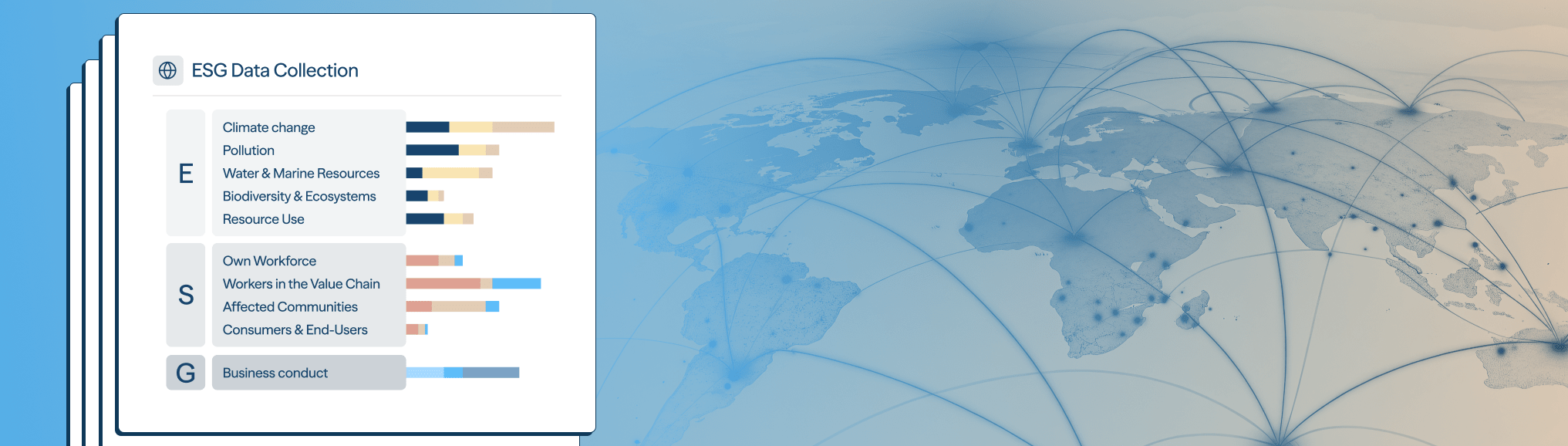
A non-financial report (or CSR/ESG reporting, sustainability report) brings together key ESG indicators: business model, CSR strategy, governance, sustainability risks, greenhouse gas emission indicators, professional equality, working conditions, local embeddedness, etc. This document allows for the assessment of a company's overall footprint beyond its financial performance, and for tracking its progress using structured indicators.
The Non-Financial Performance Statement (DPEF), launched in France in 2017 as a transposition of the 2014 European directive on the disclosure of non-financial information (NFRD), already required large companies to publish annual information on environmental, social, societal, human rights, anti-corruption, and governance issues. The objective was to enhance CSR transparency and provide stakeholders with a structured view of the company's non-financial impacts, with mandatory verification by a third-party body for the largest entities. The European CSRD (Corporate Sustainability Reporting Directive), adopted to replace and strengthen the NFRD, transforms the DPEF into a "sustainability report" starting from the 2024-2028 financial years, depending on the company's size and type (the threshold of 1000 employees and €450M in turnover was finally adopted on Tuesday, December 16, 2025). It formalizes the concept of "Double Materiality" as the basis for preparing reports: these must include company information related to ESG impacts, risks, and opportunities on topics identified as important ("material").
What is the purpose of a non-financial report?
Beyond regulatory compliance for companies subject to the CSRD (or for those that may become subject to it in the coming years, as a threshold review clause has been integrated into the European Omnibus directive modifying the CSRD thresholds), the non-financial report is above all a strategic management tool. It represents a company's long-term vision, a report on the management of its impacts, risks, and opportunities related to climate change adaptation and social and societal expectations. Publishing a report means sharing this roadmap transparently with stakeholders. Financial institutions now integrate ESG criteria into their decisions, making transparent companies more attractive to responsible investors and green funds. This opens the door to reduced-cost financing and improves ratings with specialized agencies. Both internally and externally, ESG reporting is a tool for dialogue with stakeholders and for strengthening the company's credibility.
Double materiality, a lever for anticipation and resilience
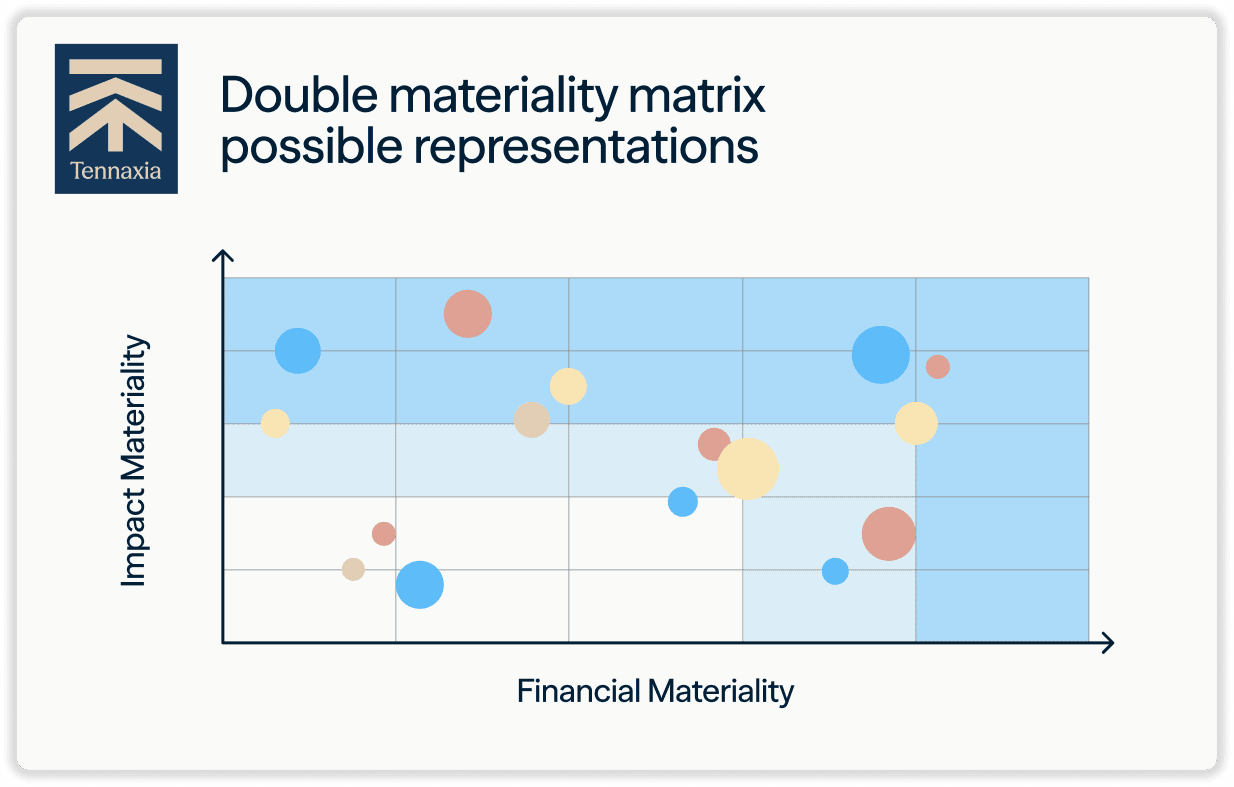
How, then, can one set about publishing a relevant report that accurately reflects the company's challenges and serves its interests? This is where double materiality analysis comes into play. Only by identifying and assessing the importance of its impacts can a company effectively manage them and initiate its transition towards a sustainable model. In a context of climate change and increased attention to Human Rights, it is also a means to identify and understand its dependencies and anticipate risks and opportunities throughout its value chain. A company that conducts a double materiality analysis will be better prepared for economic, regulatory, and social transformations, provided, of course, that ESG issues have organized governance and are integrated into the overall strategy.
The benefits and limitations of the CSRD
While the CSRD has the merit of placing double materiality at the heart of issue identification for greater relevance, its implementation complexity has been a constraint for many companies: workload, data reliability, tight deadlines... The simplification work initiated by the Omnibus directive will reduce this complexity, while continuing to offer a comparable and reliable European reporting standard.
This is also the intention of the VSME. This reporting standard (created, like the CSRD's ESRS standards, by EFRAG) was launched in 2024 for smaller companies (VSEs/SMEs/mid-caps). While reports based on this standard will be voluntary and audits not mandatory, they will enable various European economic actors to speak the same ESG language and limit requests for additional information, which are currently very time-consuming for these companies. Businesses are aware of this, as, according to the 13th edition of Tennaxia's annual study, today, beyond merely meeting potential regulatory compliance, 89% of companies use ESG information to respond to stakeholder requests.
What are the concrete benefits for businesses?
According to the analysis by the French Review of Economics and Management in its article “Exploring the Link Between ESG Integration and Financial Performance” (a meta-analysis of 37 studies published in August 2025) and despite certain limitations such as the heterogeneity of definitions and methodological disparities, research confirms that ESG is not just a matter of reputation, but a strategic driver of sustainable performance. Non-financial reports offer valuable guidance to managers, investors, and decision-makers who wish to align financial and sustainability objectives.
Companies that organize the governance of their ESG issues and publish sustainability reports to share their progress benefit from a differentiating competitive advantage and increased credibility with investors (as the non-publication of a sustainability report now limits access to certain tenders and European funding), and with customers who are increasingly attentive to the values of the brands they favor.
On the human resources front, attracting (and retaining) qualified talent becomes easier: According to a 2023 Michael Page study, 64% of candidates consider a company's CSR commitments an important factor when applying for jobs. This trend is particularly pronounced among young graduates, who seek employers aligned with their values and environmental concerns. This media visibility also positions the company as an innovative leader.
The reporting exercise also encourages detailed process mapping, revealing efficiency gains through energy optimization, or savings on raw materials, for example. It stimulates innovation by promoting circular models or low-carbon products. Faced with future standards like the Corporate Sustainability Due Diligence (CSDDD), proactive companies will avoid supply chain risks and be able to seize European subsidies from the NextGenerationEU plan. SMEs can transform the reporting exercise into a source of data-driven decisions and operational resilience.
While an increasing number of global regulations now impose this transparency obligation, it is also to encourage companies to develop a long-term vision for their economic model and align with national strategies for resilience and climate change mitigation.

In summary, the non-financial report is no longer merely a communication tool, but a major strategic opportunity to strengthen competitiveness, attract capital, and build long-term resilience, particularly in a context of evolving climate risks and regulatory frameworks.