
.svg)






Is driving an electric car really better for the environment?
What is the environmental footprint of an electric car?
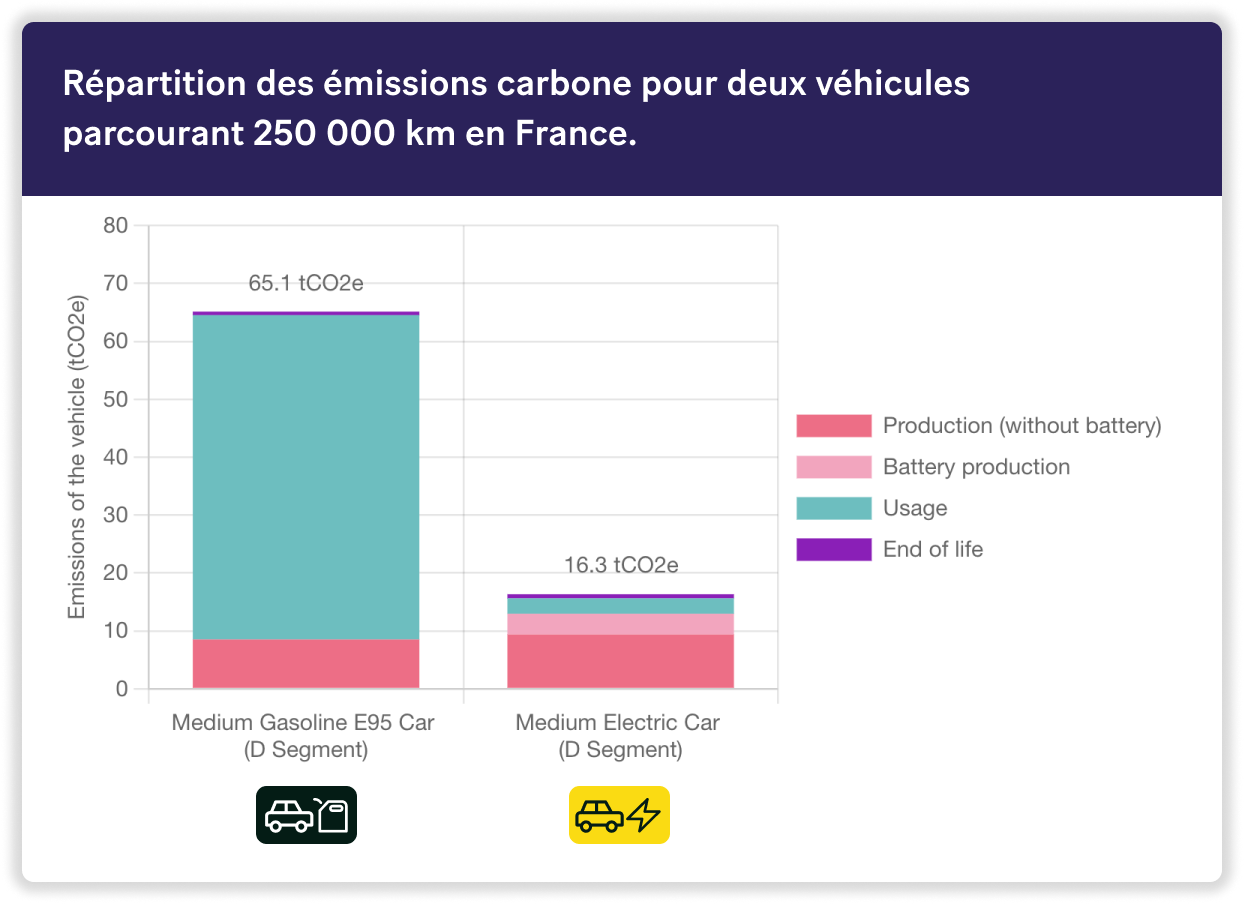
Recent studies tend to show that when using the most comprehensive emissions analysis, from manufacturing to end-of-life (LCA), the electric car is significantly less polluting than its combustion-engine equivalent, at least in terms of greenhouse gases (Carbone 4, 2022; Sacchi et al, 2022; International Council on Clean Transportation, 2021…).
This holds true for any passenger vehicle when comparing similar models of combustion-engine and battery-electric cars. We must break down the various sources of emissions throughout a vehicle's life cycle to understand the criticisms leveled at electric cars and to conclude that electric cars emit less CO2 than combustion-engine cars over their lifetime.
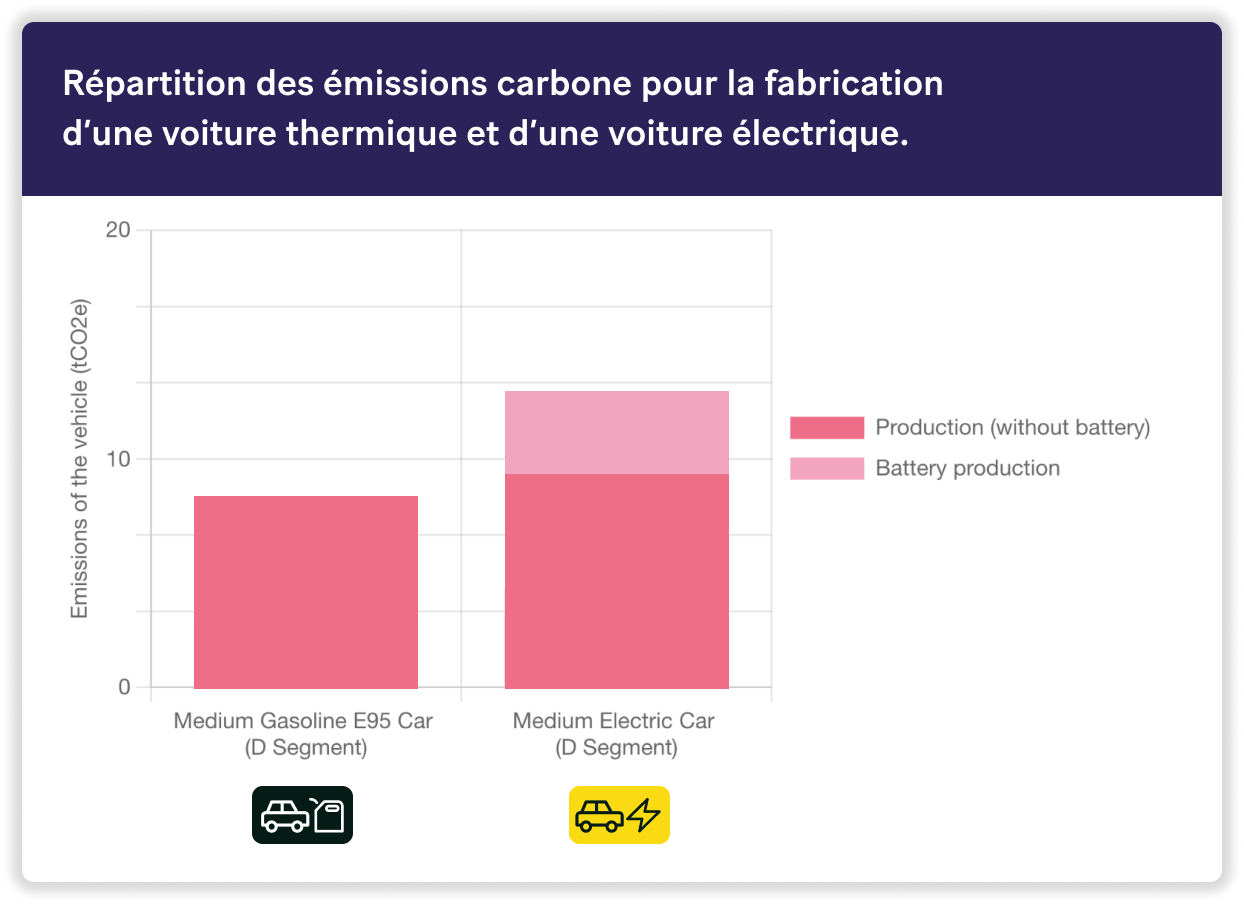
Manufacturing an electric vehicle: a polluting process.
Electric vehicle emissions are largely due to the manufacturing process, particularly the production of the battery. As its many critics point out, producing an electric vehicle is indeed more polluting than producing a combustion-engine vehicle; and the more powerful the battery, the higher the emissions associated with its manufacture. For comparison, for two similar city cars, the manufacturing phase accounts for 40gCO2e/km for the gasoline vehicle, compared to nearly double that—77gCO2e/km—for an electric vehicle (Carbone 4, 2020).
The electric car is more eco-friendly during use.
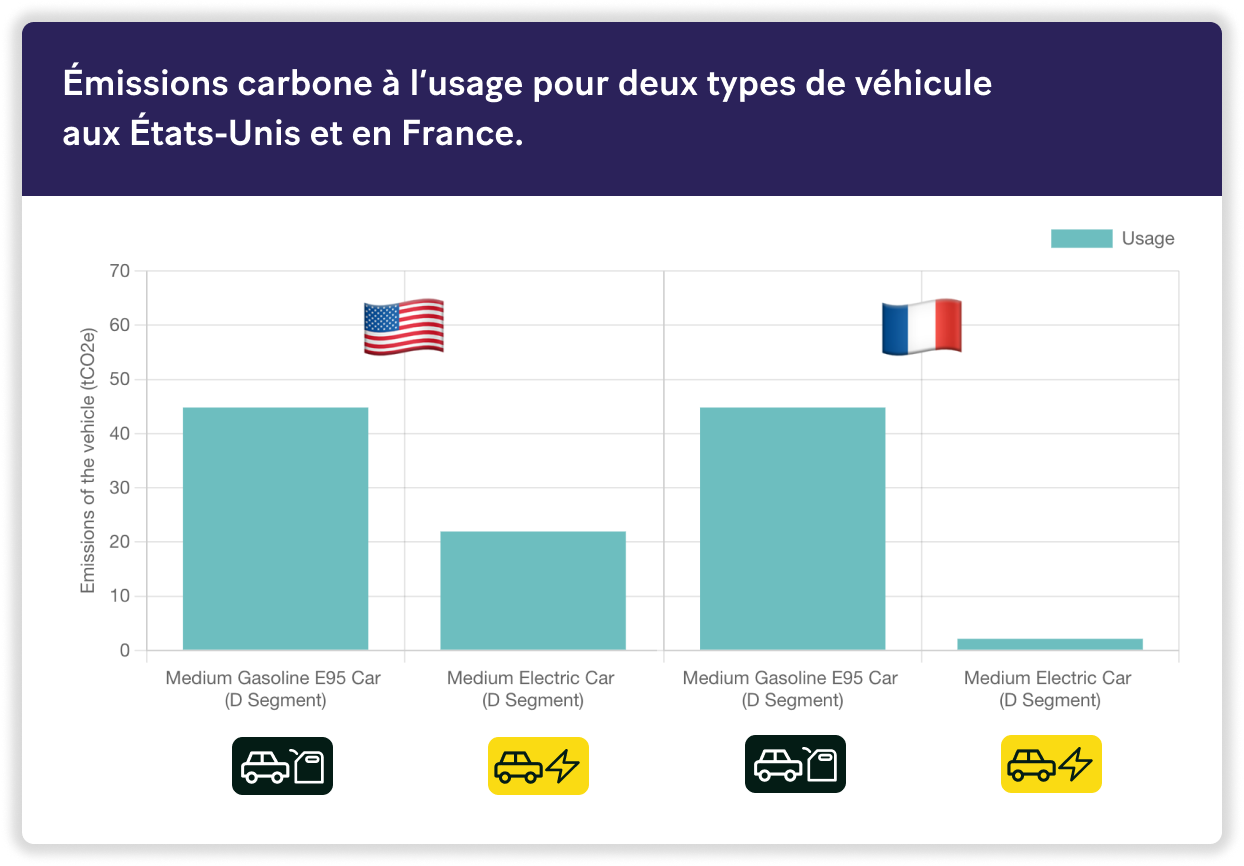
While the electric vehicle may lose out in this comparison during the initial manufacturing phase, that is not the case in the other phases of its life cycle. What makes the electric vehicle particularly attractive from a climate perspective is thevehicle usage phase : a gasoline, diesel, or other fuel-powered car releases greenhouse gases as soon as the engine is running. These emissions “at the tailpipe” do not exist at all for electric vehicles. In addition to these emissions, there are those linked to fuel extraction and transport.
Do electric vehicles emit greenhouse gases while driving?
It is more complex than that. While the electricity consumed to power the vehicle does not emit GHGs, the production of the electricity used to power an electric vehicle does generate greenhouse gas emissions. However, in Europe, and particularly in France, where electricity production is generally low-carbon, these emissions are very low, making electric cars a much less carbon-intensive mode of transport than gasoline or diesel vehicles.
In the United States, where electricity production is more carbon-intensive due to the use of coal, the number of miles that must be driven for an electric vehicle to become more "eco-friendly" than a gasoline vehicle is higher than in France.
End-of-life: similar emissions
Based on the assumptions used in the most recent studies (Carbone 4, Calculator), emissions at the end of a vehicle's life are relatively similar, and, more importantly, are significantly lower than emissions from other stages of the life cycle.
Are electric cars less polluting: is this true everywhere and all the time?
Given the significant emissions generated during the manufacturing phase—which depend directly on the weight of the car and the size of its battery in the case of electric vehicles—it is necessary to compare a small gasoline-powered Clio with a Tesla Model X.
When comparing all the factors, is it better to choose a small, fuel-efficient gasoline car or a powerful, 2.5-ton electric SUV? Which of the two emits less CO2 over its entire lifespan?
Regarding the overall environmental impact of manufacturing and using these cars, it is difficult to compare the two. In terms of climate impact, the evidence in France points toward electric vehicles, especially given the country's low-carbon electricity mix.
For comparison, one kWh of electricity consumed in France results in 0.05 kgCO2e, whereas in India, where electricity production still relies heavily on coal-fired power plants, one kWh consumed emits over 0.72 kgCO2 (IEA, 2022).
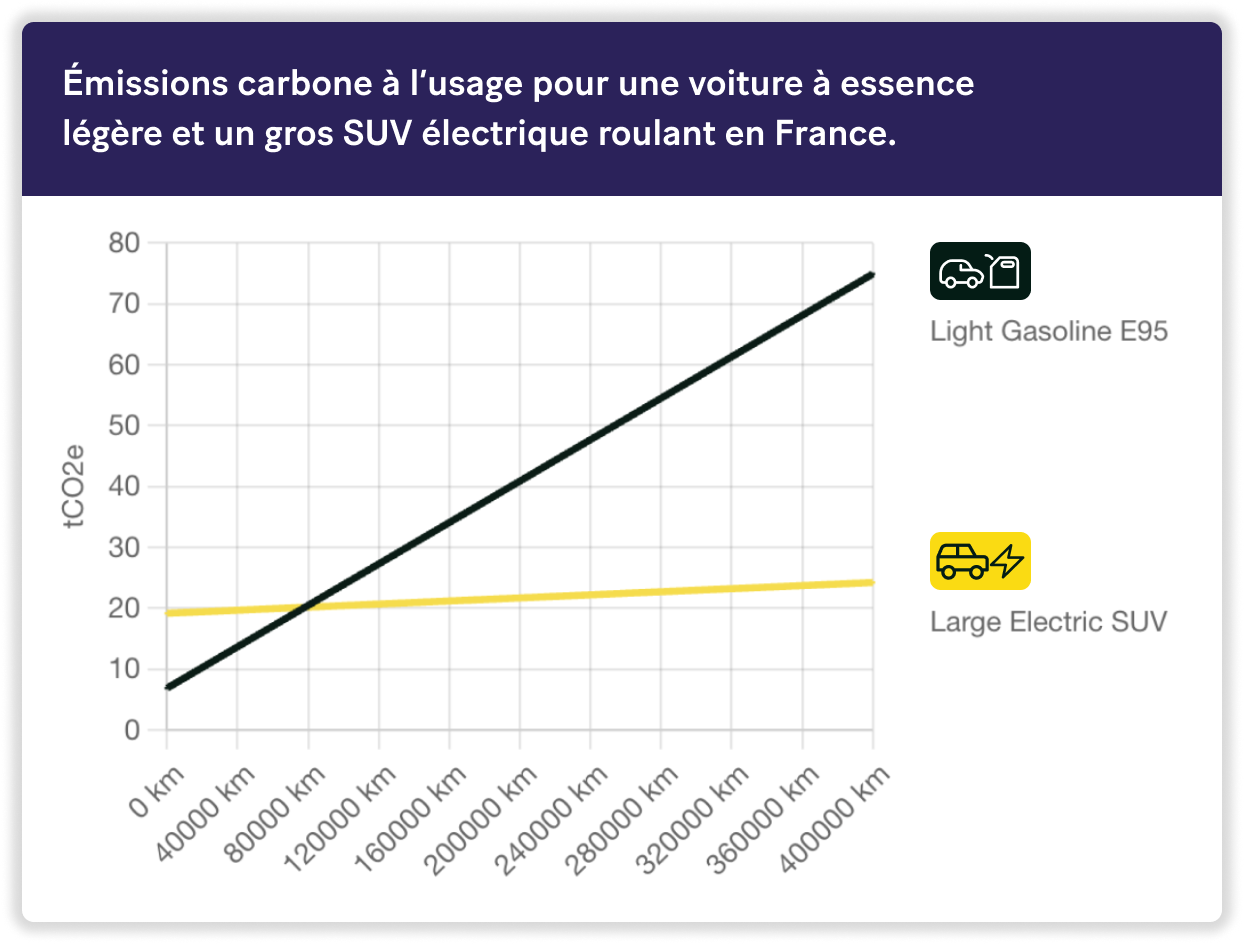
A large electric SUV begins to outperform a light gasoline-powered B-segment car in terms of climate impact after 78,115 km:
Does an electric car only become environmentally "worth it" after 10 years of use?
It all depends on the model. Compared to a combustion-engine car, an electric vehicle is only truly "worth it" from a climate perspective after a certain number of kilometers have been driven. To find out exactly what distance is required for an electric vehicle to be the better choice over a combustion-engine one, our simulator can help answer that question: https://evfootprint.org/
The average mileage of a vehicle at the end of its life is over 170,000 km, so for the vast majority of vehicles, the evidence favors electric models (Weymar & Finkbeiner, 2016). As noted by Carbone 4, the question is worth asking for secondary household vehicles, which are driven significantly less than primary vehicles (Carbone 4, 2022).
In reality, the actual number of kilometers driven to reach this milestone is likely lower, making electric vehicles even more advantageous than our model suggests. We have used a conservative assumption here, keeping the energy mix constant over time, whereas current projections point toward a general decarbonization of the electricity mix, particularly in Europe (McKinsey, 2022)
For an average electric vehicle in Europe, compared to an average internal combustion engine vehicle, the electric option becomes more advantageous on average after 42,827 km, or a little under 5 years (8,920 km/year on average in France in 2019 - Statista, 2021).
Are electric cars so clean that you can choose any model with your eyes closed?
When comparing different electric car models, it quickly becomes clear that the largest SUVs (often criticized by electric vehicle skeptics) do indeed have much higher emissions than smaller models. Our comparison tool highlights that a small electric car has a much lower carbon footprint than a larger model:
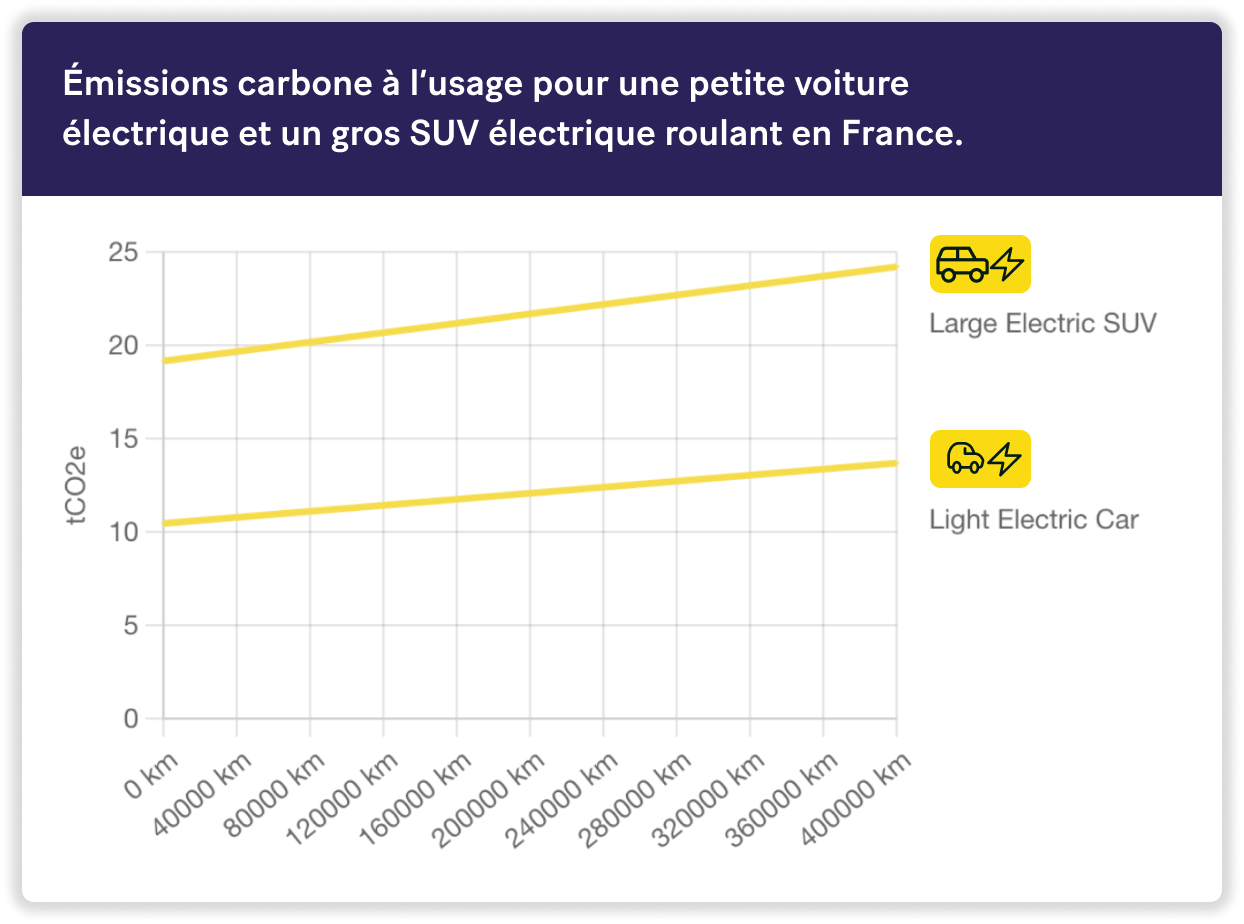
A lightweight electric vehicle will become "cleaner" from a climate perspective than a lightweight gasoline vehicle quite quickly, whereas it will take a significant number of kilometers driven to "offset" the climate impact of a large electric SUV.
An electric sedan (D-segment) will start to have a lower climate impact than a gasoline city car (B-segment) after about a hundred thousand kilometers driven. Conversely, it will take nearly twice as many kilometers for a large SUV model to be less polluting than a lightweight gasoline vehicle.
With a clean vehicle, is there no longer a need to change our habits?
The transition from traditional combustion-engine vehicles to those using alternative fuels is the path currently being promoted by legislators to reduce greenhouse gas emissions, both nationally and at the European level. To this end, it is essential to fully understand the actual environmental impact reduction of our vehicles across various alternative powertrains: electric, as well as hybrid, biofuel, hydrogen, and more.
However, it is imperative that we simultaneously question how we use our cars, as simply changing the mode of transport will not be a sufficient lever to achieve the impact reduction that nations committed to under the Paris Agreement.
TheInternational Energy Agency (IEA) earlier this year, followed by major energy suppliers a few weeks ago, reiterated that sobriety—meaning the reduction of our consumption, travel, and usage—is necessary to address the dual challenge of reducing available fossil fuels and limiting climate change. One of the primary levers for sobriety is to prioritize low-impact modes of transport over the car, such as cycling, public transit, and trains.
In an article featuring Guillaume Martin, the media outlet Bon Pote breaks down the benefits of cycling and debunks common misconceptions about this mode of green transport , which serves as an effective, low-carbon alternative for short trips: Cycling is the future of our mobility.
Conclusion: are electric cars truly eco-friendly?
Car usage is one of the most significant sources of emissions, both on a national scale and for individuals. The international goals set by the Paris Agreement and the ambition to achieve global carbon neutrality require us to rethink our habits and explore alternatives to traditional mobility. In line with findings from Carbone 4, Transport & Environment, and the Paul Scherrer Institute, an electric vehicle used as a primary car produces fewer emissions than its combustion-engine equivalent, even in countries with a more carbon-intensive energy mix than France.
Except in the case of secondary vehicles (which are driven an average of 3,000 kilometers per year), it is therefore useful, with the goal of reducing emissions, to promote the use of electric cars over gasoline-powered ones. However, this transition raises other societal and geopolitical questions, which Carbone 4 attempts to address in this comprehensive FAQ: Common misconceptions about electric cars.