
.svg)




.webp)


Introduction
More than ever, the climate emergency is on everyone's mind today. And beyond carbon issues, Corporate Social Responsibility (the famous CSR) as a whole has become a recurring theme within companies.
While it's important to build a strong CSR strategy, the real challenge, as often, lies in its execution. Indeed, knowing how to properly *manage* one's overall CSR strategy remains a topic that is sometimes very difficult to address. In this article, we will explore the strategic importance of good management, to act sustainably on the environment and showcase one's commitments.
What is CSR in a company?
It seems wise, before discussing strategy and its management, to address the concept of CSR. To quote the definition from the Ministry of Ecological Transition, CSR is « a concept in which companies integrate social, environmental, and economic concerns into their activities and their relationships with stakeholders».
Corporate Social Responsibility is based on the pillars of sustainable development.
Given the impact of their activities on the environment, companies therefore have a crucial role to play in the evolution of our societies towards a more sustainable model. They must therefore meet requirements of various kinds (regulatory, economic...).
What CSR requirements exist, and in what form?
Although long considered a time-consuming subject with no real economic or strategic interest, implementing a CSR strategy is now an issue that can affect all companies, in various forms:
- The Loi Pacte (2019), and the ISO26000 standard (2010), among others, lead companies to take social and environmental issues into account in their activities.
- As part of the CSRD (and previously the DPEF), companies with more than 250 employees generating a turnover of €50 million or with a balance sheet exceeding €25 million, as well as certain SMEs, are subject to the obligation to publish an annual non-financial report integrating the social and environmental risks, challenges, and actions related to their activities.
- Subcontractors and suppliers may be subject to CSR requirements, outlined in the calls for tenders or more broadly in the procurement policy of their clients.
- Companies are therefore subject to various constraints related to their commitments and actions for the environment. Regardless of their nature, organizations must be able to address them, and this requires implementing a CSR strategy.
Defining your CSR strategy
As we have seen, implementing a CSR strategy should enable companies to demonstrate their voluntary commitment and meet stakeholder expectations regarding the impact of their activities.
How to effectively define your strategy?
Defining your strategy first means establishing a starting point, a working basis before setting out your roadmap.
For this assessment, the materiality matrix is an important step. It allows for mapping the company's issues, risks, and needs, in relation to its activities and stakeholders.
In this way, a company can build its CSR strategy based on the various elements emerging from this matrix, and focus its efforts where it will have the most impact (employee well-being, activity transparency, environmental actions, etc.).
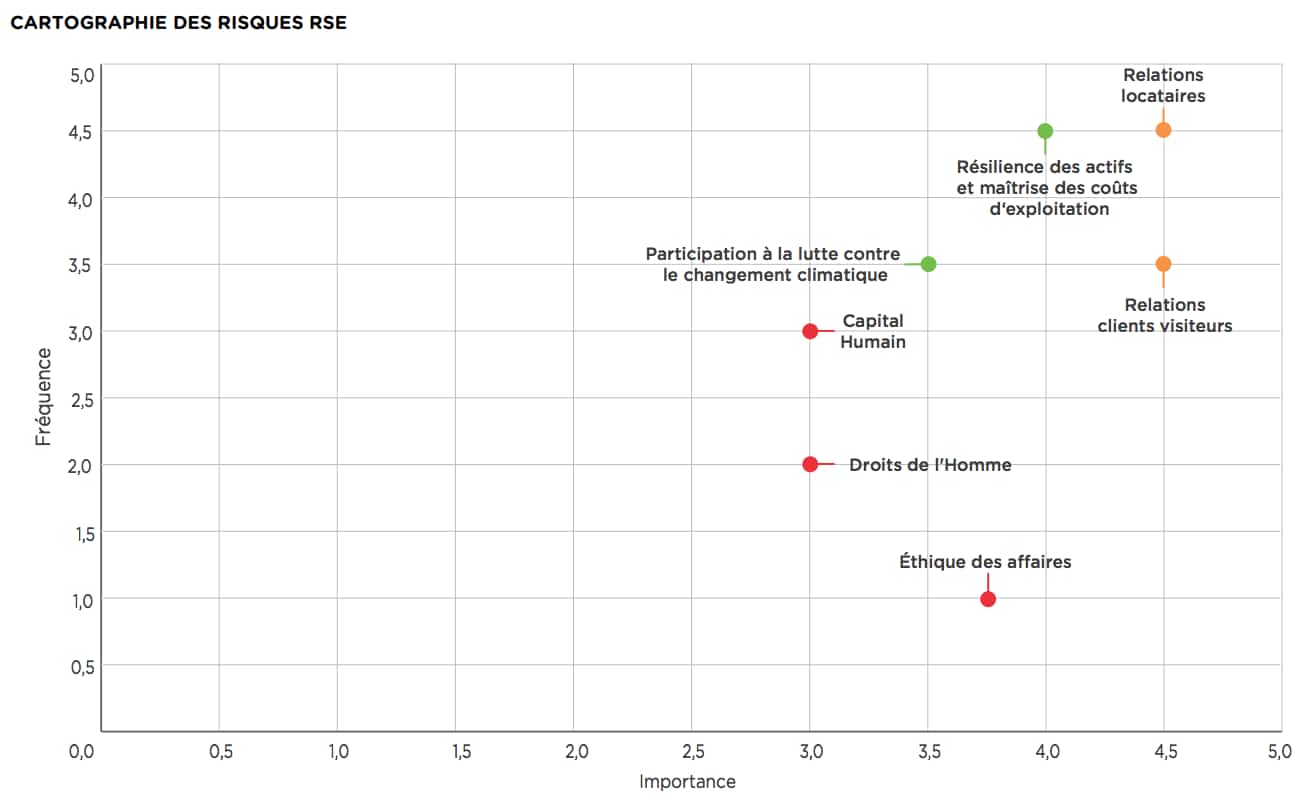
Once this assessment has been completed and the main challenges identified, it is important to make these objectives operational. To do this, a company can create a certain number (but not too many!) of key performance indicators, KPIs.
Formalizing its strategy and actions ensures that they can be tracked, understood, and quantified during the implementation and management of the CSR strategy. To do this, the company can rely on several elements, such as:
- The United Nations Sustainable Development Goals: by cross-referencing the SDGs and the issues from the materiality matrix, a company can define actions to be taken.
- A Corporate Carbon Footprint Assessment : by conducting its Carbon Footprint Assessment, a company that has identified its CO2 emissions as a major issue will be able to define quantified reduction targets.
- Once your CSR strategy is defined, it needs to be managed to engage all employees in this commitment to climate and the environment.
How to implement a CSR strategy?
The effectiveness of a CSR strategy is measured by the results of the actions undertaken, and therefore, employee involvement is crucial.
Raise awareness & train
The first step in implementing a CSR strategy is therefore to ensure that all internal stakeholders (employees, decision-makers, unions...), and to some extent external ones (suppliers, public bodies...) are receptive to the commitment being made. To do this, several options exist:
- The training courses: they provide employees with all the necessary tools and skills to fully understand the importance of the CSR strategy, enabling them to contribute effectively to its success.
- The Climate Fresk : these awareness workshops help participants understand the challenges and encourage their involvement in the company's strategy.
- This list is, of course, not exhaustive, and many other initiatives can embed environmental issues into the company's daily operations (local initiatives, associations, etc.).
How to manage a CSR project?
Once all company employees are aware of climate change issues and sustainable development, it's time to implement concrete actions.
However, a company's commitment to reducing its impact must be sustained over time, monitored, and maintained, and for this, specific tools are available.

Lakaa's mission Lakaa is simple: to enable you to deploy and monitor your network's local CSR initiatives (points of sale, agencies, stores, etc.), share best practices, and communicate more precisely about your commitments.
Lakaa offers numerous benefits for the company, its employees, and the local communities involved in this initiative:
- To make tangible employees' environmental commitment within their professional environment.
- To leverage individual engagement through collective commitment.
- Engage all employees, regardless of their role or location.
- Connect with local stakeholders through local partners.
This centralized platform allows those in charge to monitor ongoing projects using precise KPIs, and enables employees to demonstrate their commitment to the environment by participating in or proposing new initiatives.
By making it easier to implement and sustain actions, Lakaa enables companies and their networks to embed and manage their CSR strategy long-term.
Now you know all about the challenges of a well-structured CSR roadmap and the importance of managing it to ensure its effectiveness.