
.svg)




.webp)


On July 12, 2024, the European Parliament voted to adopt the Nature Restoration Law. Significantly watered down after intense negotiations between EU member states, this text, intended to be one of the new pillars of the European Green Deal, leaves a bitter taste for some activists and climate advocates who believe it falls short of the challenges we face today. Nevertheless, it allows the European Union to set an initial course for protecting biodiversity on the continent.
Biodiversity in Europe: An alarming situation
European ecosystems have severely degraded in recent years. It is currently estimated that 80% of natural habitats in the European Union are in poor condition. The effects on flora and fauna are extremely concerning. Europe has lost 25% of its bird populations since 1980 (60% for species living in agricultural environments), and insect populations are estimated to have plummeted by 70 to 80% in areas of human activity.
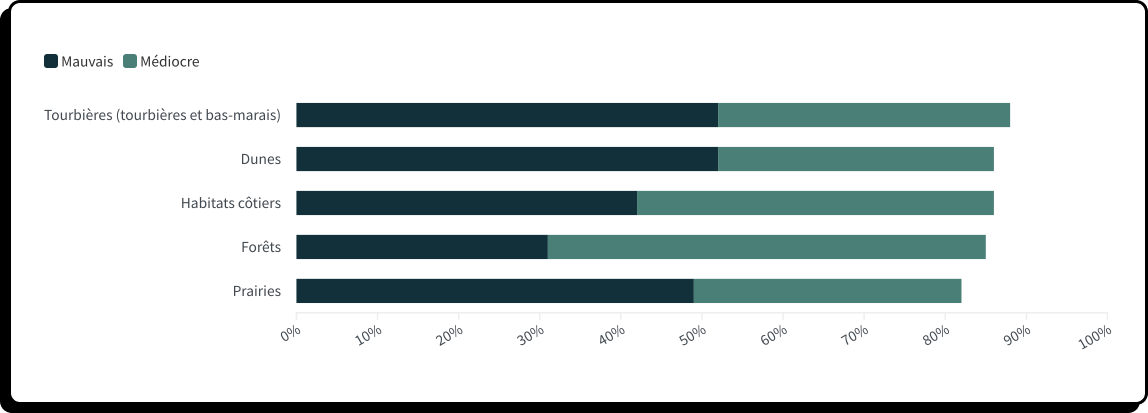
These ecosystems are not only a prerequisite for preserving biodiversity but they are also crucial for mitigating the effects of climate change and ensuring our food security.
Pollinating insects, which are essential to our agriculture, are particularly threatened. One-third of bee and butterfly species are in decline across Europe, and 10% are even on the verge of extinction.
The European Central Bank has also noted that, among European non-financial corporations, 72% are critically dependent on ecosystem services and 75% of corporate loans in the euro area were granted to companies dependent on at least one ecosystem. Protecting nature is therefore also a major economic issue.
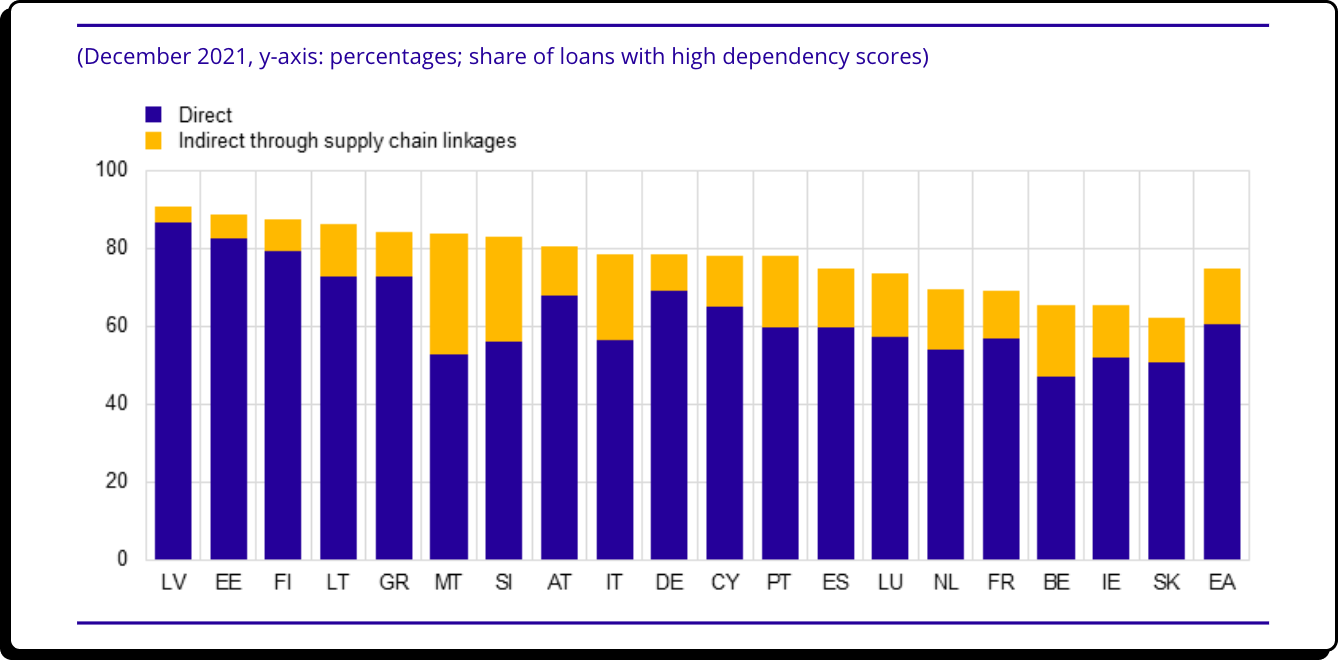
Note: The chart shows the share of loans with a high dependency score (greater than 0.7) for at least one ecosystem service. A loan is classified as highly dependent when the borrowing company has a sufficiently high direct dependency score (blue bar) or a sufficiently high dependency when potential supply chain links are taken into account (yellow bar).
If this issue is not taken seriously today, global warming will only amplify the current trend and its consequences. Through this regulation, the European Union has therefore sought to break this cycle and has set itself the goal of reversing this degradation by 2050.
The genesis of the Nature Restoration Law
The origins of the initiative
The European Union had already committed to implementing measures to preserve ecosystems and biodiversity, notably within the Kunming-Montreal Global Biodiversity Framework. This agreement, adopted at the 2022 COP15 biodiversity summit, calls for the restoration of 30% of degraded ecosystems by 2030.
The European Union is also a Party to the Convention on Biological Diversity (CBD), an international treaty adopted in 1992 at the Rio Earth Summit aimed at establishing strategies for the conservation and sustainable use of biodiversity. Among other things, it led to the deployment of Natura 2000 sites within the EU. The 196 Parties to this treaty meet every two years to review progress and implement new measures.
Building on the assessment of the state of European biodiversity and in order to meet its international commitments, the European Union has sought to make nature conservation a priority and one of the pillars of the European Green Deal much like the CSRD and the CSDDD which have also integrated biodiversity into their scope.
The European Nature Restoration Law is primarily part of the “EU Biodiversity Strategy for 2030” adopted in 2021 by the European Parliament, and is linked to the “Fit for 55” package, which aims to reduce the European Union's greenhouse gas emissions by 55% by 2030 compared to 1990 levels.
A turbulent legislative journey
The initial version of the text was proposed on June 22, 2022, by the European Commission. While highly ambitious at the start, the text was revised throughout the legislative process in the face of opposition from numerous member states and parliamentarians, who viewed it as a threat to the agricultural and fishing sectors.
The heavily amended text was adopted by the European Parliament on July 12, 2023, following an extremely close vote, with the EPP having been particularly vocal in its opposition to the bill.
The regulation then underwent a trilogue process between the European Commission, the European Parliament, and the European Council. Following further compromises, the three institutions reached an agreement on November 9, 2023. This agreement includes various exemptions and the possibility of pausing certain parts of the deal, particularly in the event of risks to European food security.
This version of the text was finally adopted by the European Parliament on February 27, 2024.
However, the text was blocked once again by the European Council, partly due to the agricultural crisis that shook Europe at the beginning of 2024. To be adopted by the Council, the bill requires a qualified majority—meaning 55% of EU member states representing 65% of the European population. After Hungary suddenly changed its stance, the regulation could no longer secure this majority. It was ultimately thanks to a reversal by Austria that the European Council approved the draft Nature Restoration Law on June 17, 2024: 20 countries voted in favor, 6 against (Hungary, Finland, the Netherlands, Italy, Poland, Sweden), and 1 abstained (Belgium).
The European Parliament finally adopted this latest version on July 12, 2024; it was published in the Official Journal of the European Union on July 29 and entered into force on August 18.
What does the Nature Restoration Law contain?
Article 1 defines the main objectives of this regulation:
- “To restore biodiversity and ecosystem resilience in the long term and in a sustainable manner across all terrestrial and marine areas of the member states by restoring degraded ecosystems;
- To achieve the Union’s overarching objectives regarding climate change mitigation, climate adaptation, and land degradation neutrality;
- To strengthen food security;
- To fulfill the Union’s international commitments.”
How does this translate into practice?
The regulation sets targets to be met over clearly defined periods. Depending on their specific circumstances, member states must implement a roadmap that will allow them to restore the ecosystems within their territory. The text provides a comprehensive list of the types of habitats covered.
Restoring degraded ecosystems by 2050
The Nature Restoration Law requires member states to implement measures to restore 20% of the European Union’s marine and terrestrial ecosystems by 2030, and all of them by 2050. This includes a variety of ecosystems such as forests, wetlands, grasslands, and marine ecosystems.
During the initial period, priority must be given to Natura 2000 sites, which are protected areas identified as harboring threatened habitats and species representative of European biodiversity.
Natural habitats considered to be in "poor condition" must be subject to restoration measures to maintain a favorable conservation status for species in the long term. These measures will cover:
- 30% of the area of these habitats by 2030
- 60% by 2040
- 90% by 2050
Beyond efforts to restore natural habitats, Member States commit to preventing any deterioration of restored areas, areas in good condition, and ecosystems that harbor species requiring preservation.
Protecting pollinator populations
Our food security and the broader European economy depend heavily on ecosystem services. Given the state of European ecosystems, it has become essential to take measures to preserve and improve these vital services.
The regulation therefore aims to reverse the decline of pollinator species by 2030. These insects play a crucial role in soil fertility and agricultural production. European Union Member States must therefore take all necessary measures to halt this decline by 2030 and achieve an upward trend in pollinator populations from that date onwards.
Restoring agricultural ecosystems
Agricultural ecosystems are among those most affected by biodiversity loss, particularly due to the use of pesticides and, more generally, intensive farming practices. They are therefore receiving special attention.
States must take measures to achieve an upward trend in at least 2 of the following 3 criteria:
- grassland butterfly populations
- the stock of organic carbon in cropland mineral soils
- the share of agricultural land with high-diversity landscape features
Restoration measures must also be taken to increase populations of common farmland birds. The regulation provides a list of the bird species concerned by these measures for each country.
Restoring river connectivity
In line with the EU Biodiversity Strategy for 2030, the Nature Restoration Law aims to restore 25,000 km of rivers across the European Union.
Member States must create an inventory of artificial barriers hindering the natural connectivity of rivers and commit to removing all obsolete barriers—those no longer serving purposes such as navigation, energy production, or water supply.
These measures must also help restore the natural functions of floodplains located along the targeted rivers.
Trees and forest ecosystems
Member States must implement measures to strengthen forest biodiversity. This specifically includes bird populations, which will be subject to special monitoring.
Member States will be required to achieve an upward trend in 6 of the following 7 indicators:
- standing deadwood
- lying deadwood
- share of uneven-aged forests
- forest connectivity
- organic carbon stock
- share of forests dominated by native tree species
- tree species diversity
In parallel, the regulation reaffirms the EU's goal of planting 3 billion trees by 2030 across all environments (forest, urban, agricultural, etc.), while prioritizing native species. The European Commission has set up an online counter to track the progress of this project.
All these measures aim to restore biodiversity, create new carbon sinks, and promote the development of ecological corridors.
Restoration of urban ecosystems
The regulation notes that urban ecosystems account for 22% of the EU's land area and are home to the vast majority of the European population.
Adapting to climate change is one of the main challenges for these urban areas, which are prone to the development of heat islands.
States must ensure that by 2030, the proportion of urban green space and tree canopy does not decrease. From 2031 onwards, they must take the necessary measures to increase this share.
Implementing the EU Nature Restoration Law
Each European Union member state must now take the initial necessary steps and will then be required to develop and submit a restoration plan to the Commission by September 1, 2026, at the latest. The Commission will then assess its compliance.
Restoration plans will include, in particular:
- quantification of the areas to be restored within their territory
- the targets set for each of the points mentioned in the regulation
- implementation procedures
- the budget required and allocated to achieve the set targets
- the timeline for implementing restoration measures
They must ensure regular monitoring of various biodiversity indicators
It should be noted that as part of the EU Biodiversity Strategy for 2030, a tool for tracking actions taken is already available on the European Commission's website. It lists the various goals the EU has set for itself, along with their current status.
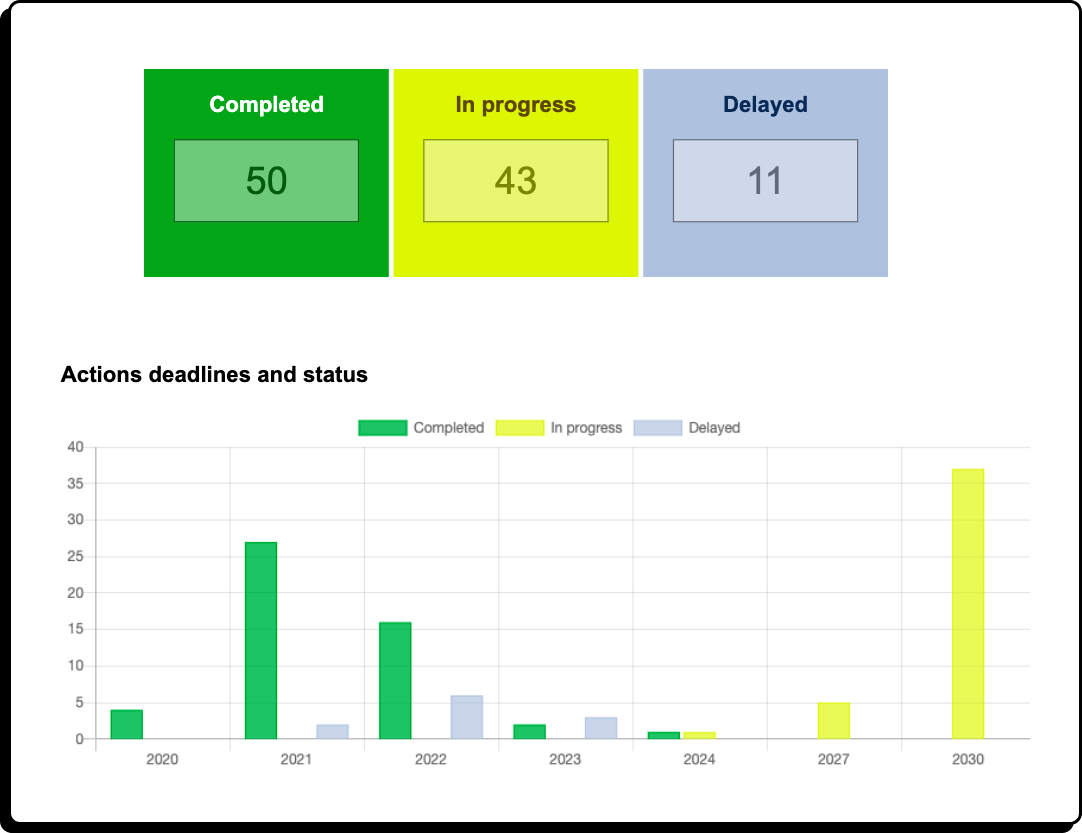
At the request of the European Parliament, a mechanism has been added to halt measures implemented as part of agricultural ecosystem restoration. This can only be activated in exceptional circumstances that could threaten the European Union's food security. It addresses concerns raised by agricultural representatives regarding the potential impact of such measures on their operations and production capacity.
Implementation challenges
The difficulties European institutions faced in reaching an agreement to ratify this regulation foreshadow the challenges its implementation will encounter. These are multifaceted and will require close cooperation between member states and a shared long-term vision.
Coordination between states
Coordination between the various EU member states is a significant challenge. Each country has different ecological, economic, and social contexts, which can make uniform application of the regulation across the European Union difficult. Divergences in national priorities, technical capacities, and governance can create disparities in the execution of restoration actions.
Geography is also a major point of disparity. France, for example, possesses the largest maritime area in Europe, part of which is severely degraded, and therefore faces significant challenges not shared by Central European countries. The fishing sector, already struggling, has already expressed its concern regarding the implementation of this regulation.
Financing restoration projects
Financing projects is another major challenge. Restoring degraded ecosystems requires considerable long-term investment. Although European funds, such as those from the Common Agricultural Policy or environmental programs, are available, they may be insufficient to cover the scale of the needs.
A report published on September 4, 2024, titled "A Common Perspective for Agriculture and Food in Europe" recommends the establishment of a “temporary fund for a just transition” that would supplement the CAP and help farmers cope with the challenges posed by the transformation of their activities and their adaptation to the consequences of climate change.
Beyond these European funds, the commitment of member states, additional public investment, and increased involvement from the private sector will inevitably be necessary to bridge this gap.
The difficulty of monitoring results
The final major challenge is monitoring progress and compliance with the regulation's obligations, which poses technical and administrative difficulties. Member states will not only have to meet complex ecological targets but also regularly track their progress.
What methodologies and tools will be used to track project progress and the achievement of such varied and specific goals?
This will require robust monitoring systems, qualified human resources, and mechanisms to ensure that the deadlines set by the EU are met, lest restoration efforts be slowed down.
Conclusion: Is the Nature Restoration Law a success?
The European Nature Restoration Regulation represents an important step toward protecting biodiversity and ecological resilience in Europe. Although watered down after long negotiations, it remains a key element of the European Green Deal, setting ambitious goals to reverse ecosystem degradation by 2050. However, its adoption is only a first step, as its implementation raises numerous challenges. Member states will need to overcome divergent priorities, mobilize significant funding, and ensure rigorous monitoring of the progress made.
Preserving biodiversity is not just an environmental issue, but an economic and social one as well. Ecosystems are essential to food security, the fight against climate change, and the prosperity of many economic sectors in Europe. The success of this regulation will therefore depend on close coordination between governments, active participation from the private sector, and the mobilization of all stakeholders. If Europe manages to meet these challenges, it will be able to not only restore its ecosystems but also become a model of ecological resilience for the rest of the world.
Sources:
- “European agriculture: what paths for the future of the CAP in 2028?”, Vie Publique, 09/06/2024
- “Biodiversity: the European regulation to restore nature published in the Official Journal of the EU”, Vie Publique, 07/31/2024
- “Regulation (EU) 2024/1991 of the European Parliament and of the Council of 24 June 2024 on nature restoration and amending Regulation (EU) 2022/869”, EUR-Lex, 07/29/2024
- “Adoption of the European Nature Restoration Law”, CHM France, 06/26/2024
- “Nature Restoration Law: A new act in EU ecological policy”, Aminetou Ciré, Observatoire de l’immobilier durable, 06/18/2024
- “After months of deadlock, member states adopt the European Nature Restoration Law”, Toute l’Europe, 06/17/2024
- “Nature restoration law: Council gives final green light”, European Council, 06/17/2024
- “What is the state of nature in the EU?”, European Council, 06/17/2024
- “Economic and financial impacts of nature degradation and biodiversity loss”, Andrej Ceglar, Miles Parker, Carlo Pasqua, Simone Boldrini, Marie Gabet and Sjoerd van der Zwaag, European Central Bank, 06/2024
- Biodiversity: what is the European Union doing?, Toute l’Europe, 03/14/2024
- “Nature restoration: Parliament adopts law to restore 20% of EU’s land and sea”, European Parliament, 02/27/2024
- “Europe: last chance to save biodiversity!”, France Nature Environnement, 11/23/2023
- “Why is a nature restoration policy essential in Europe?”, Agnes Halloserie, IDDRI, 07/12/2023
- “25% loss of birds in Europe since 1980: intensive farming blamed by major study”, Sandy Dauphin and Noémie Lair, France Inter, 05/15/2023
- “Biodiversity: insect populations are collapsing in Europe”, Stéphane Foucart, Le Monde, 02/10/2023
- “EU biodiversity strategy for 2030”, EUR-Lex, 09/14/2020
- “EU biodiversity strategy for 2030”, CHM France
- “Convention on Biological Diversity, key international instrument for sustainable development”, United Nations