
.svg)







🔎 Key takeaways
Managing energy consumption is one of the major challenges facing businesses this winter. This notably involves regulating the use of heating and air conditioning in your premises.
Specific temperatures that must be respected are set out in the regulations. Let's take a look.
1) What are the maximum heating temperatures?
Heating limits were introduced during the 1970s oil crisis.
For offices, public access buildings (ERP), and housing:
Articles R. 241-25 to R. 241-29-1 of the Energy Code set the maximum temperatures for heating offices, public access buildings (ERP), and housing.
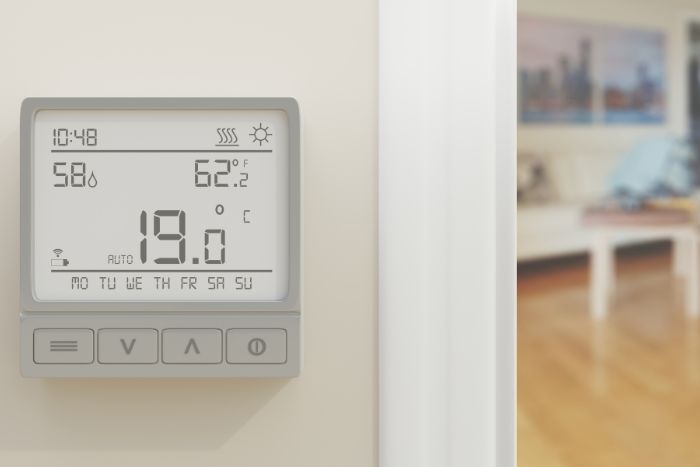
The upper temperature limit for heating these buildings is set at 19°C.
During unoccupied periods, the upper limits are set:
- at 16°C for an unoccupied period of 24 to 48 hours,
- and at 8°C for a period equal to or greater than 48 hours.
Note: However, these limits contradict ergonomic recommendations for screen work. TheINRS recommends 21-23°C in winter.
For other premises:
The decree of July 25, 1977, categorizes and sets the upper heating limits applicable to various premises: scientific, sports, craft, industrial, commercial, or agricultural.
For industrial premises during periods of activity:
- Premises where heating is necessary for product processing or preservation: Temperature limit set freely according to technical constraints
- Premises where non-sedentary work is performed: Temperature limit generally set by the prefect, after consultation with the labor inspectorate, with this temperature not exceeding 18°C (if no limit is set by the prefect, use 18°C as a reference)
- Other production premises: 19°C
For industrial premises during inactive periods:
Premises where the maximum heating temperature during activity is 16°C or less: 8°C when the period of non-occupancy is 48 hours or more;
Premises where the maximum heating temperature during activity is above 16°C:
- 16°C if the period of non-occupancy is greater than 24 hours but less than 48 hours;
- 8°C if the period of non-occupancy is 48 hours or more;
- No temperature limit is imposed for premises requiring a higher temperature for product preservation purposes.
What are the possible penalties?
Fine for Class 5 offenses (i.e., €1500 for individuals and €7500 for legal entities):
- in case of violations of these provisions (double for repeat offenses).
- in case of obstruction of the duties of agents responsible for investigating these offenses.
2) When is it permitted to operate air conditioning?
Since 2007, Article R. 241-30 of the Energy Code prohibits operating an air conditioning if the indoor temperature of the premises does not exceed 26°C.
This prohibition does not apply to:
- buildings or parts of buildings which, due to constraints related to their use, must ensure specific conditions of temperature, humidity, or air quality;
- residential dwellings;
- premises and establishments where medical care is provided to non-hospitalized individuals;
- hospitals;
- residential dwellings, premises, and establishments where elderly people or young children are housed or accommodated.
3) Who must install an automatic temperature control system?
Certain buildings are required to install an automatic temperature control system, per room or, if justified, per heated zone of the building.
Buildings concerned:
- buildings for which the building permit is filed from July 21, 2021 onwards;
- existing buildings (i.e., building permit filed before July 21, 2021), provided that installation or replacement work for heat generators (e.g., boiler, etc.) is undertaken from July 21, 2021 onwards. The obligation then applies to the owner of the emitters connected to the installed or replaced generator.
Exemptions:
- the heating system's heat generator is an independent wood-burning heating appliance,
- for existing buildings, if owners provide a study demonstrating that the installation of an automatic temperature control system per room or heated zone is not feasible with a return on investment period of less than 6 years.
Photo credit: 538080030 @Rawf8