
.svg)





🔎 Key takeaways
- Fondements théoriques : Issu du rapport Brundtland (1987), le développement durable repose sur trois axes indissociables : l'économie responsable (circulaire, pérenne), l'écologie (réduction des émissions et préservation des ressources) et le social (équité, QVT, inclusion).
- Cadre réglementaire : Les actions privées s'inscrivent dans l'Agenda 2030 de l'ONU (17 ODD), la loi PACTE en France (entreprise à mission, raison d'être) et la directive européenne CSRD, qui impose un reporting extra-financier standardisé (normes ESRS) basé sur la double matérialité.
- Passage à l'action : Une stratégie concrète s'articule autour de la mesure de l'empreinte carbone (notamment via des outils comme Tennaxia), la sobriété numérique, la mobilisation interne (QVT, mobilité douce), l'ancrage local et les achats responsables.
What are the SDGs?
On August 2, 2015, 193 member countries of the United Nations (UN) adopted an ambitious agenda, designed to transform our world by 2030: the Sustainable Development Goals (SDGs). These 17 goals, comprising 169 targets and measured by 244 indicators, are a roadmap aimed at eradicating poverty, protecting the planet, and ensuring prosperity and peace for all. Principles more commonly known as the “5Ps” (People, Planet, Prosperity, Peace, and Partnerships).
Succeeding the Millennium Development Goals (MDGs) for the social dimension and the Rio process for the environmental dimension, the SDGs are part of the 2030 Agenda, which notably incorporates the commitments of the Paris Agreement on climate. They are distinguished by their global scope and their commitment to "leave no one behind".
This global agenda is the result of extensive international consultation, involving governments, civil society, and private sector actors, thereby highlighting the importance of collective action. However, at the dawn of the decisive decade for their achievement, the challenges are immense: inequalities persist, climate change is accelerating, and geopolitical tensions complicate international cooperation.
The 17 Sustainable Development Goals (SDGs)
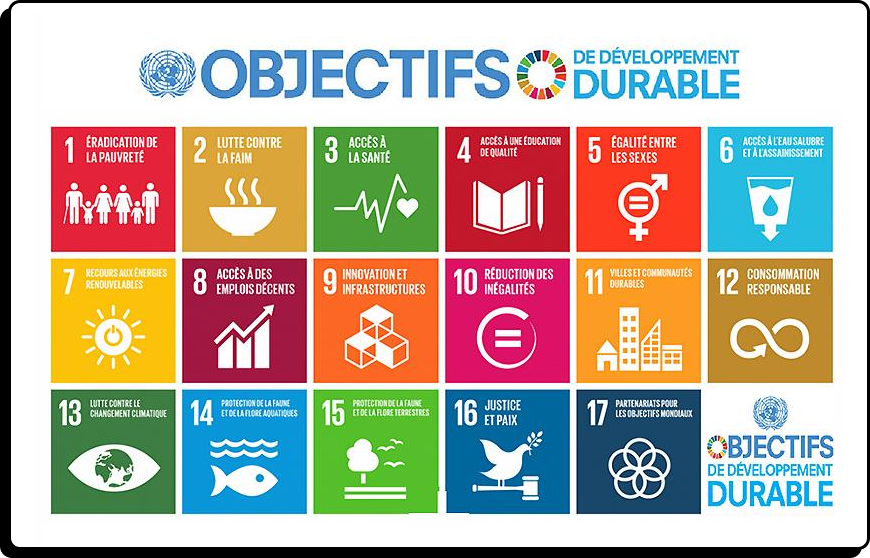
1 - No Poverty
This first goal aims to eliminate poverty in all its forms and everywhere in the world.
Among its various targets are the eradication of extreme poverty, the implementation of universal social protection systems, access to basic services, and protection against extreme climate events.
2 - Zero Hunger
This goal aims to end hunger, achieve food security, improve nutrition, and promote sustainable agriculture.
Its targets have social, economic, and environmental dimensions. These include doubling agricultural productivity by 2030, adapting agricultural production to climate change, and protecting small-scale producers. The main target is to provide everyone, especially vulnerable populations, with healthy and sufficient food.
3 - Good Health and Well-being
This involves ensuring healthy lives and promoting well-being for all at all ages.
Among the targets to be achieved are the reduction of infant mortality, the fight against epidemics such as AIDS, tuberculosis, malaria, road safety, drug prevention, universal access to treatments and vaccines, and the establishment of universal health coverage.
4 - Quality Education
The goal is to ensure access to quality education for all and promote lifelong learning opportunities.
Targets include equal access to education, accessibility of school facilities for all children, without distinction of sex or disability-related discrimination, the development of scholarships to facilitate access to higher education, the promotion of knowledge related to sustainable development, and vocational training.
5 - Gender Equality
This aims to achieve gender equality and empower all women.
Targets include ending discrimination against women and girls, eradicating all forms of exploitation, providing women with the same rights as men, enabling equal opportunities in education and employment, valuing domestic work and promoting shared responsibilities, and combating early marriages and genital mutilation.
6 - Clean Water and Sanitation
This goal aims to ensure access to water and sanitation for all and to sustainably manage water resources.
Among its targets are universal access to safe, affordable drinking water for all by 2030, combating water pollution, universal access to sanitation services, efficient water use by all, and the protection and restoration of water-related ecosystems.
7 - Affordable and Clean Energy
Through this goal, the aim is to ensure access for all to reliable, sustainable, and modern energy services at an affordable cost.
Targets include the development of renewable energy in the global energy mix, policies to improve energy efficiency, the development of infrastructure enabling universal access to energy, and international cooperation on clean energy technologies.
8 - Decent Work and Economic Growth
This goal aims to promote sustained, inclusive, and sustainable economic growth, full and productive employment, and decent work for all.
Targets include ensuring decent work for all, equal pay policies, combating slavery and forced labor, universal access to banking and insurance services, economic development tailored to the needs of each country, and the efficient use of natural resources to combine economic growth with environmental protection.
9 - Industry, Innovation, and Infrastructure
The goal here is to build resilient infrastructure, promote inclusive and sustainable industrialization, and foster innovation.
Among the targets are the development of quality, reliable, and sustainable infrastructure, especially in developing countries, access for businesses of all sizes to financial services, the promotion of sustainable industry, support for R&D, and affordable universal access to the internet and, more generally, to information and communication technologies.
10 - Reduced Inequalities
This goal aims to reduce inequality within and among countries.
The targets for this objective include adopting fiscal, wage, and social policies to advance greater equality, the empowerment and social, economic, and political inclusion of all people, without discrimination, facilitating financial flows, particularly to least developed countries, regulating financial institutions and markets, and managing and simplifying migratory flows.
11 - Sustainable Cities and Communities
The aim of this objective is to make cities and human settlements inclusive, safe, resilient, and sustainable.
Among the targets for this objective are access for all to affordable housing and basic services, accessibility to public transport, especially for people with disabilities, the protection of cultural and natural heritage, the management of cities' environmental impact (waste, air quality, etc.), the implementation of integration and inclusion policies, and the development of economic links between urban, peri-urban, and rural areas.
12 - Responsible Consumption and Production
The aim of this objective is to establish sustainable consumption and production patterns.
Targets include combating food waste, responsible management of natural resources, reducing and recycling waste, particularly industrial chemicals, policies aimed at developing sustainable tourism, cooperation between states on sustainable production and consumption patterns, and promoting sustainable practices in public procurement tenders.
13 - Climate Action
The objective here is to take urgent action to combat climate change and its impacts.
Among the targets cited in this objective are strengthening resilience and adaptive capacity to climate-related hazards and natural disasters, implementing the Green Climate Fund and financing aid plans for climate change mitigation in developing countries, and establishing measures to prevent the consequences of climate change in national policies and corporate strategies.
14 - Life Below Water
This objective aims to conserve and sustainably use the oceans, seas, and marine resources for sustainable development.
The targets for this objective include reducing marine pollution, especially that from land-based activities, regulating fishing, preserving at least 10% of marine and coastal areas, sustainable exploitation of marine resources, and combating ocean acidification.
15 - Life on Land
The objective is to sustainably manage forests, combat desertification, halt and reverse land degradation, and stop biodiversity loss.
Targets include combating poaching and trafficking of protected flora and fauna species, the preservation, restoration, and sustainable use of terrestrial ecosystems (forests, wetlands, mountains, arid zones, etc.), the protection of biodiversity and endangered species, and the mobilization of financial resources for these actions, particularly to support developing countries in the sustainable management of their ecosystems.
16 - Peace, Justice, and Strong Institutions
The aim is to promote peaceful and inclusive societies for sustainable development, ensure access to justice for all, and build effective, accountable, and inclusive institutions at all levels.
Among the targets are a significant reduction in all forms of violence and related death rates, combating child abuse and trafficking, corruption, and arms trafficking, institutional transparency, access to information and justice, and ensuring legal identity for all.
17 - Partnerships for the Goals
This goal aims to strengthen the means of implementing and revitalizing the global partnership for sustainable development.
Targets include increasing international support for developing countries to implement the SDGs, ensuring developed countries honor their commitments in this area, strengthening technology transfer and dissemination, improving the coherence of sustainable development policies between countries, establishing an equitable international trade system, and setting international indicators for sustainable development.
The three pillars of the SDGs
The SDGs are rooted in the three pillars of sustainable development : economic, social, and environmental. While some are cross-cutting across these three pillars, each objective necessarily falls within at least one of them.
Economic Pillar
The SDGs recognize that sustainable economic development is crucial for eradicating poverty and reducing inequalities. Thus, among these objectives, SDG 1 aims to eradicate poverty in all its forms worldwide. SDG 8, for its part, seeks to promote sustained, inclusive, and sustainable economic growth, with a particular focus on creating decent jobs for all. Finally, SDG 10 addresses inequalities by seeking to reduce disparities within and between countries.
Achieving these objectives is essential to ensure shared prosperity and equitable development worldwide. However, persistent economic disparities, exacerbated by global crises such as the COVID-19 pandemic, highlight the complex challenges the world faces in reaching these targets.
Social Pillar
The social pillar of the SDGs focuses on promoting well-being for all, at all ages, and access to equal opportunities. SDG 3 thus aims to ensure healthy lives and promote well-being for all. SDG 4, for its part, emphasizes access to quality education, recognizing that education is a fundamental lever for human development. Finally, SDG 5 calls for gender equality and highlights the importance of women's empowerment in all aspects of social, economic, and political life.
These objectives are interdependent: improving education and health, and promoting gender equality, are essential conditions for reducing poverty and fostering inclusive growth.
Environmental Pillar
The SDGs also take into account the urgency of protecting our planet. SDG 13 urges urgent action to combat climate change and its impacts, while SDG 14 and SDG 15 call for the conservation and sustainable use of oceans, seas, marine resources, and terrestrial ecosystems.
These objectives highlight the need to rethink our relationship with nature, by adopting more sustainable practices to preserve natural resources and biodiversity for future generations. They thus highlight the need for collective action and the development of innovative solutions to drive the transition towards greener economies and effectively combat climate change.
Challenges and Opportunities for Achieving the SDGs
Achieving the Sustainable Development Goals (SDGs) requires the joint mobilization of public and private stakeholders in the 193 signatory states, as well as close cooperation among them. This cooperation, essential for achieving the goals, represents both a major opportunity and a significant challenge. Indeed, the diversity of involved stakeholders increases the risk of free riders emerging, which can thus compromise collective efforts.
Major Challenges
The implementation of the SDGs faces several major challenges. Firstly, funding for SDG-related initiatives is a crucial issue. Estimates from UNCTAD (United Nations Conference on Trade and Development) indicate that $2.5 trillion will be needed to achieve these goals, and mobilizing these resources remains a major obstacle, particularly in developing countries, which is why the financing and simplification of financial flows are an integral part of the priority targets of many SDGs.
Secondly, international coordination is essential but difficult to achieve. The SDGs require global cooperation, but geopolitical tensions and diverging interests among countries make this cooperation complex. Finally, monitoring and evaluating progress also pose challenges, whether due to limited institutional capacity or simply a lack of coordination among the many stakeholders involved in these goals.
Opportunities Offered by the SDGs
Despite these challenges, the SDGs also offer unprecedented opportunities to transform our societies. They encourage innovation and the development of new technologies, particularly in the areas of renewable energy, sustainable agriculture, and water resource management.
The SDGs also foster partnerships among the public, private, and civil society sectors. These collaborations should enable the mobilization of diverse resources, knowledge, and skills to achieve common goals. Finally, from a business perspective, integrating the SDGs into their strategy can not only contribute to sustainable development but also strengthen their competitiveness and resilience in the face of climate change and societal shifts.
Implementation of the SDGs
As we inexorably approach the 2030 Agenda deadline, it's time to take stock of the progress made towards these goals, to which numerous public, private, and civil society actors have committed.
As we mentioned achieving the Sustainable Development Goals requires an unprecedented mobilization of financial, technical, and human resources, as well as enhanced cooperation at all levels.
Who is involved?
The SDGs are not just the responsibility of governments. They concern all actors in society.
States: Every country, regardless of its level of economic development, is encouraged to integrate the SDGs into its national policy. Governments must develop ambitious plans, align their budgets with these goals, and regularly report on their progress.
Businesses: The private sector plays a crucial role in achieving the SDGs. Businesses are called upon to adopt sustainable business practices, innovate for environmentally friendly solutions, and contribute to the funding of SDG-related initiatives. Public-private partnerships are also strongly encouraged.
Civil Society: NGOs, community organizations, and citizens' associations are essential for monitoring the implementation of the SDGs, advocating for fairer policies, and raising awareness among populations about the challenges and opportunities of sustainable development. Responsibility is also individual, and everyone is encouraged to continuously contribute to achieving these goals.
International Institutions: UN agencies, development banks, and other international institutions have established monitoring frameworks, financing systems, and technical assistance to support countries, particularly developing ones, in achieving their goals.
Where do we stand?
Currently, the results remain mixed. While some notable progress has been made, many challenges persist:
Uneven Progress : Some goals, such as access to quality education (SDG 4) and the reduction of extreme poverty (SDG 1), have seen significant advances in several regions of the world. However, progress remains largely uneven, particularly in the least developed countries where structural challenges persist due to a lack of funding and proactive policies.
Climate Change: One of the biggest challenges to date remains climate change. Despite the commitments made during the Paris Agreement in 2015, global greenhouse gas emissions continue to rise, jeopardizing the achievement of environment-related SDGs (SDG 13, 14, 15). While developed countries have begun a concrete reduction in their emissions, GHG, this is not the case for many developing countries that wish, just like Europe or the United States over the past two centuries, to be able to pursue their growth without environmental constraints. The stakes are therefore also financial and geopolitical.
Financing: The total cost to achieve the SDGs is estimated at $2.5 trillion per year over 15 years. However, current investments remain largely insufficient. Public funding must be increased, and new sources of private financing must be mobilized to bridge the gap. This primarily falls to developed countries, international institutions, and private financial actors.
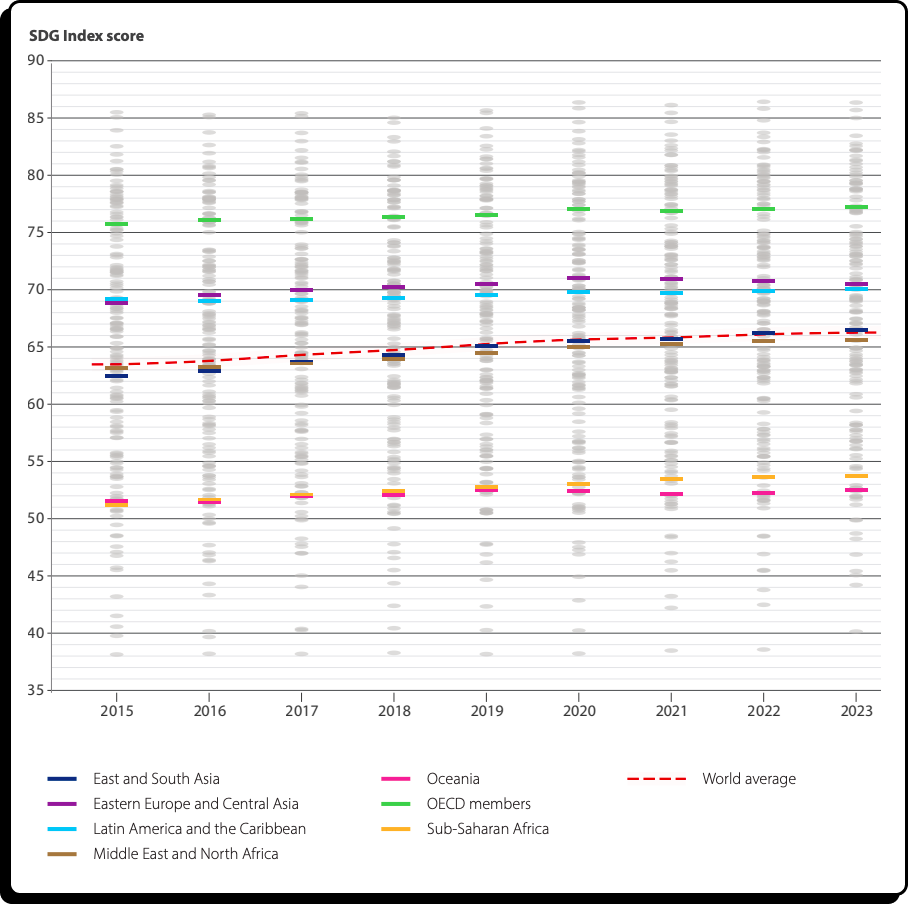
The SDG Index: This index from the SDSN (Sustainable Development Solutions Network), an NGO created in 2012 by the UN, tracks each country's progress towards the goals. It shows that, although progress has been made, no country is on track to fully achieve all 17 SDGs by 2030. Scandinavian countries currently lead the ranking, but even they still face many challenges to achieve all the goals.
Conclusion
The UN Sustainable Development Goals represent an essential framework for building a fairer, more prosperous, and more sustainable future. They address the most pressing challenges of our time, ranging from poverty eradication to the fight against climate change. However, their achievement depends on our collective ability to overcome financial, political, and institutional obstacles, while leveraging the opportunities offered by innovation and international cooperation.
To achieve these goals by 2030, continuous mobilization of all stakeholders is necessary, at all levels – from governments to businesses, and citizens worldwide. It is together that we can build a future that leaves no one behind, and that preserves our planet's resources for future generations.
Sources:
- “The Sustainable Development Report 2024”, SDSN, 17/06/2024
- “The Sustainable Development Goals”, Novethic, 04/09/2023
- “The SDGS in action”, United Nations Development Programme
- “17 Goals to Transform Our World”, United Nations