
.svg)





Defined by exceptional craftsmanship and longevity, and serving as a symbol of unique values and lifestyles, the luxury industry spans numerous sectors, including fashion (Haute Couture, leather goods, cosmetics, etc.), gastronomy, and hospitality. The largest share of this industry is represented by the fashion sector.
Regarding environmental commitment, this sector is marked by a late but growing awareness of climate change, with initial actions signaling the beginning of reflection and new initiatives.
A favorable economic context
In 2023, the global luxury market was worth $1.5 trillion worldwide. Relatively unaffected by the economic slowdown, it continues to post annual growth rates of around 10% and breaks records year after year, with profitability levels averaging between 19% and 22%. It remains resilient to the effects of inflation due to the specific nature of its market and a clientele less sensitive to price. This growth is also driven by an increasing number of consumers and a successful digital transformation.
French houses and companies continue to lead the way, with an overrepresentation of the "KHOL" group: Kering, Hermès, L’Oréal, and LVMH, which together accounted for over $900 billion in market capitalization in 2023, with LVMH alone representing $400 billion.
The luxury market is traditionally divided into two main segments: the personal luxury market, which includes fashion accessories, clothing, watches, footwear, jewelry, perfumes, and cosmetics, and the experiential luxury market which includes travel, hotels, restaurants, furniture, as well as culinary products, wines, and spirits.
While the personal luxury market still enjoys very strong growth, it is the experiential market that shows the most significant momentum.
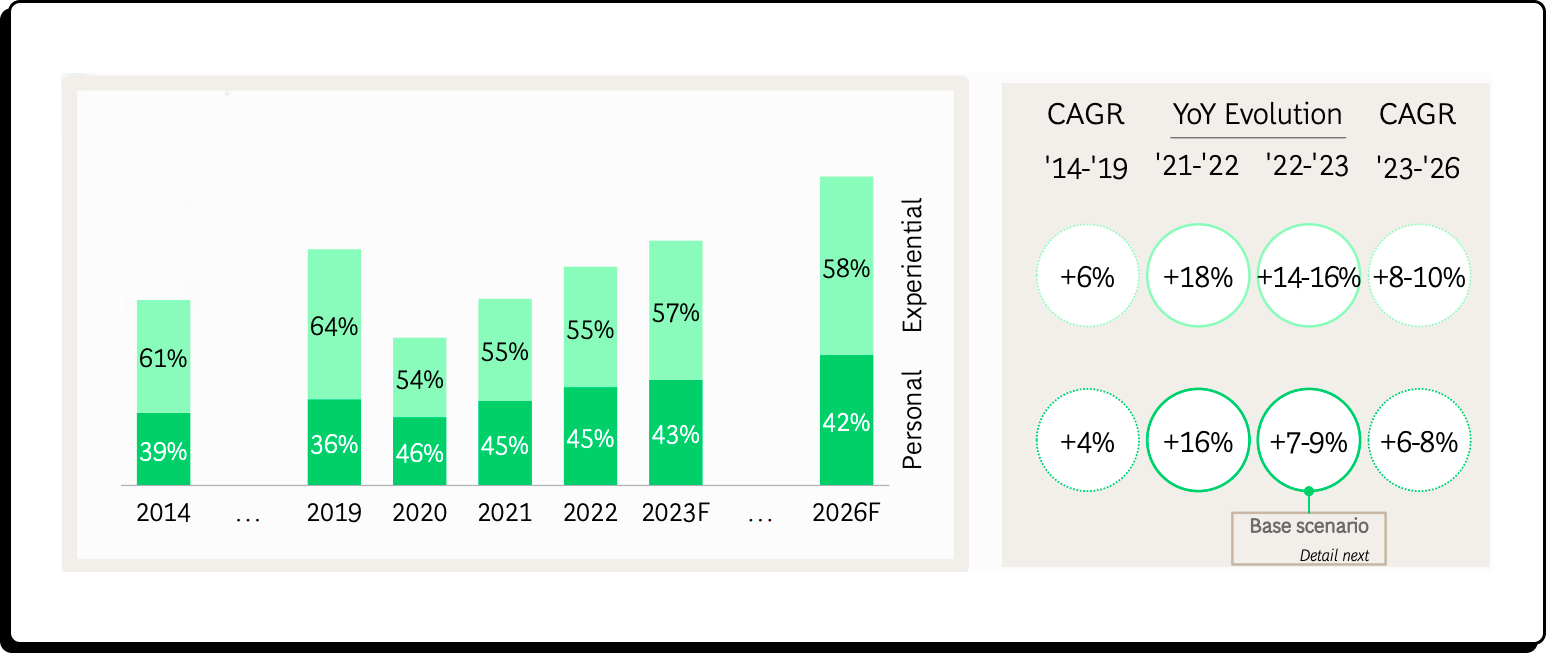
Note: Personal luxury includes clothing, footwear, accessories, leather goods, beauty products, jewelry (branded or otherwise), and watches / Experiential luxury includes furniture, food and wine, gastronomy and hospitality, as well as exclusive vacations.
The near-constant economic growth of the luxury sector and its prominent position in the European landscape make it a player that must serve as a model and a driving force for the ecological transition within the fields in which it operates. This role is all the more important as the luxury industry is a trendsetter, defining the styles that subsequently influence the mass market.
Ultimately, luxury appears to be a sector well-positioned for the ecological transition. By valuing the quality of materials and craftsmanship, as well as the timelessness of its products, it aligns perfectly with the development of sustainable practices.
The environmental impact of luxury
Assessing the luxury sector's environmental impact is a complex task. As we have outlined, the luxury industry operates across numerous sectors, spanning both products and services with varying and often incomparable implications. In the absence of more comprehensive studies conducted by luxury houses and independent parties, it remains difficult to provide a complete account of the industry's effects on the climate.
The fashion sector alone is a massive emitter. The textile industry generates 1.2 billion tons of CO2 every year. It is the third most polluting sector in the world, following food and energy. According to the Ellen MacArthur Foundation, greenhouse gas emissions from the fashion industry are set to rise by more than 50% by 2030. If no concrete action is taken, the fashion world could consume a quarter of the global carbon budget by 2050.
Aware of these challenges, leading luxury groups have been spearheading initiatives for several years to align with the greenhouse gas emission reduction trajectories recommended by the Paris Agreement and the Science Based Targetsinitiative, particularly to protect their brand image.
Are you looking for carbon footprint software ? Discover the solution from Tennaxia.
Growing pressure from stakeholders
Luxury is unique in that it embodies a distinct lifestyle. Customers who purchase luxury goods want to embody the image and values conveyed by the brand. Consequently, the reputational risk posed by climate change is a genuine threat that brands must take into account. The Boston Consulting Group estimates that 80% of a luxury product's value is tied to the brand (compared to 20% on average for a standard product), so it is essential for luxury brands to uphold the values championed by their clientele.
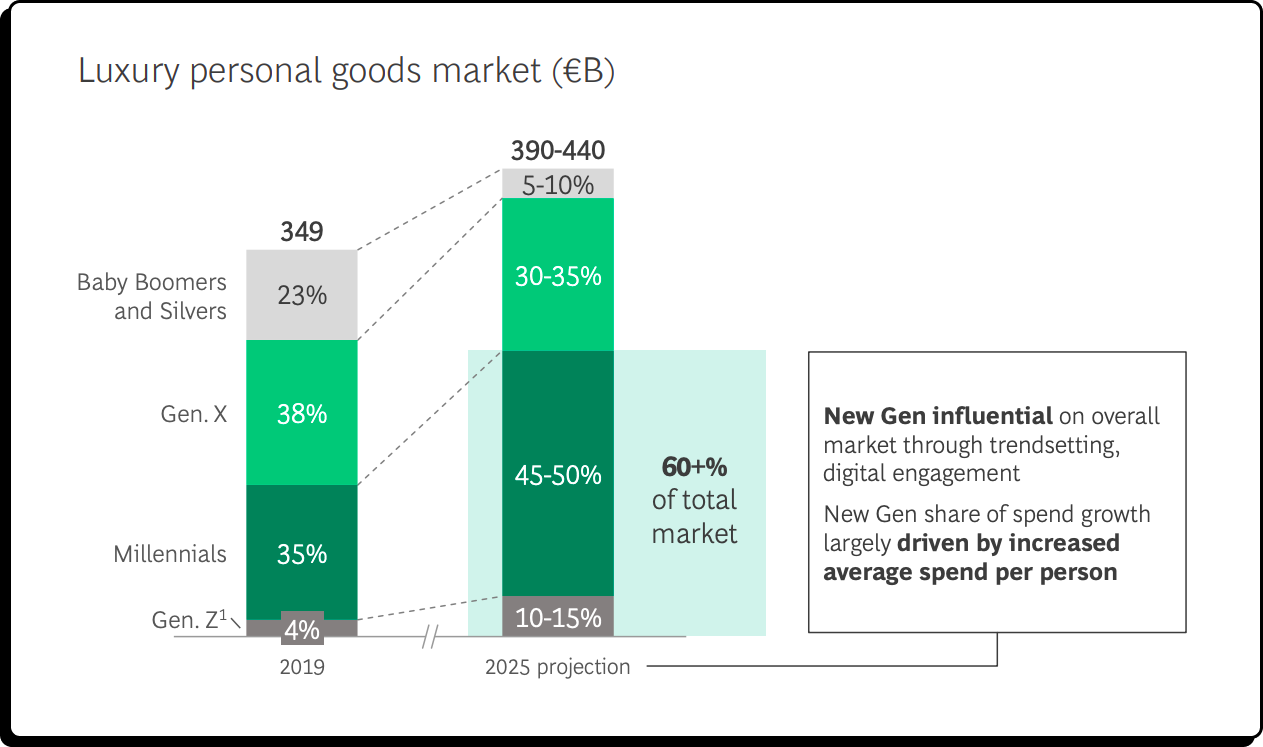
Note: Figures are rounded. Personal goods include leather accessories, clothing, watches, jewelry, perfumes, and cosmetics. Gen Z, 1993-2001; Millennial, 1978-1992; Gen X, 1963-1977; Baby Boomers, 1946-1962; Silvers, <1945. COVID effects are factored into the 2026 projection.
Much like the successful pressure exerted on major luxury brands in the 90s to abolish the use of fur, in recent years, the sector's clientele has been moving in a clear direction: the environment is gradually becoming a central concern.
Indeed, Millennials (i.e., Generation Y, born in the 80s and 90s) are more concerned about the environment than previous generations: it is a priority for 42% of them, compared to 37% for the average customer.
This environmental concern is even more pronounced for Generation Z, which is expected to account for 15% of luxury purchases by 2025 and 40% of luxury goods purchases within 15 years, making them a prime target for luxury players. The latter will therefore need to strengthen their climate commitment to preserve their brand image and turn it into a key competitive advantage.
Intra-sector initiatives
For several years now, the luxury sector has begun to commit to environmental issues, and competition between brands to strengthen their image is pushing them to innovate and bring the various players in the industry along with them.
These initiatives are often driven directly by the major groups themselves, who bring their suppliers along with them. This is the case for Kering, whose CEO, François-Henri Pinault, presented the "Fashion Pact" at the G7 summit in Biarritz in 2017. This agreement brings together more than a hundred companies in the fashion sector and includes among its flagship measures carbon neutrality by 2050, the use of 100% renewable energy by 2030, and an end to the use of materials derived from intensive farming for their collections.
More specifically, the Fashion Pact follows the requirements of the SBTi (Science-Based Targets initiative) for the climate and encourages signatories to build their objectives based on scopes 1, 2, and 3 validated by the SBTi in order to reach Net-Zero by 2050.
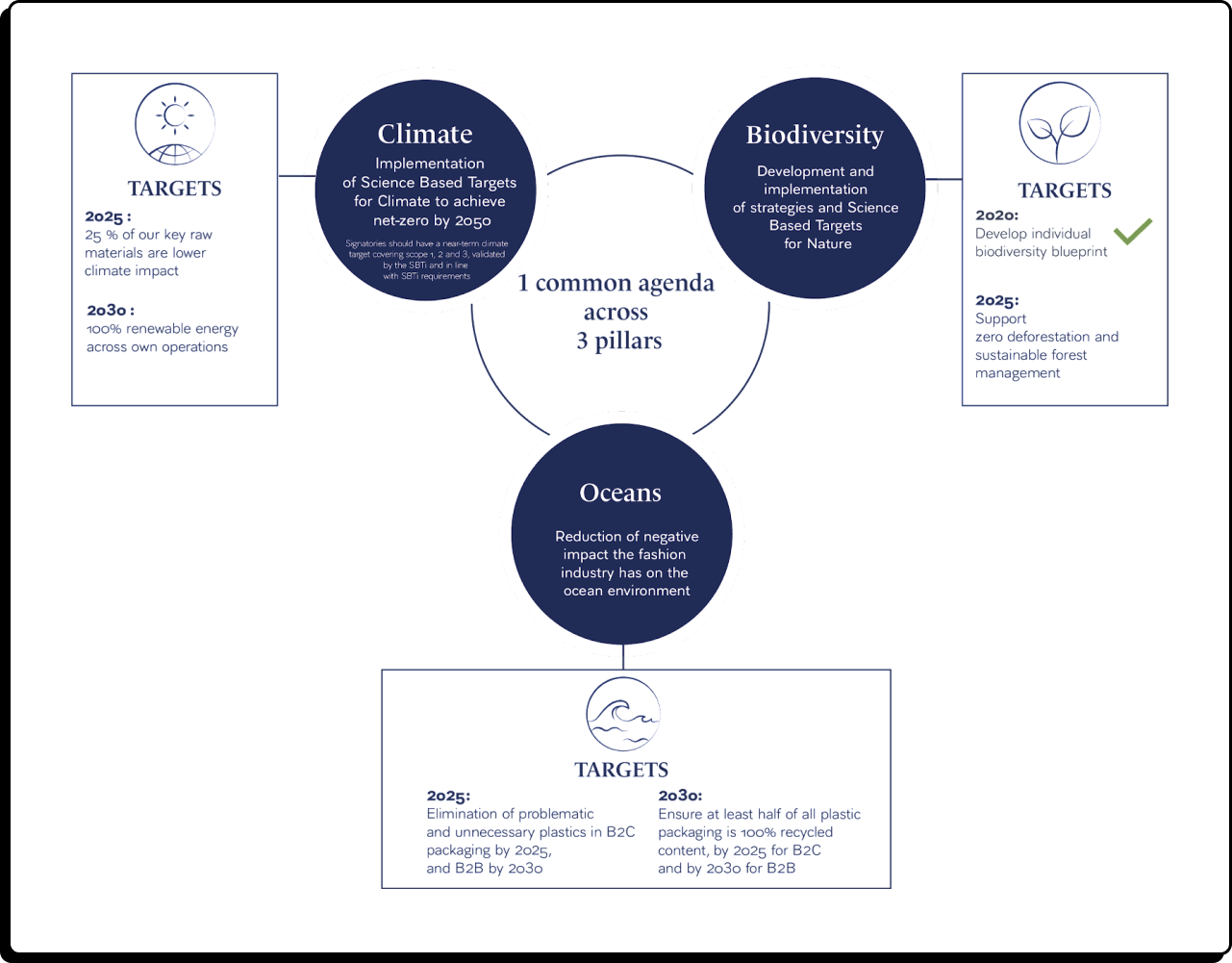
While the Fashion Pact does not include binding measures, its presentation at the G7 makes it a powerful driver of environmental commitment for the fashion industry, led by luxury companies.
Other initiatives are overseen by third-party organizations. This is the case for the Fashion Industry for Climate Actioncharter, launched globally by the UN during COP24 in 2018 in Katowice, Poland. This charter sets a target of a 30% reduction in greenhouse gas emissions by 2030 for its signatories and also relies on the SBTi (Science-Based Targets initiative) methodology to guide the decarbonization of the 43 fashion players currently committed to it.
With nearly 200 fashion companies, the Sustainable Apparel Coalition publishes an annual report with the Boston Consulting Group, the Pulse Score, which assesses the sector's progress on environmental issues and provides the tools to properly analyze a company's impact and the steps to take to manage it.
The largest luxury brands thus act as a driving force for environmental commitment among fashion industry players, providing a framework for the sector's evolution by leveraging methodologies like the SBTi and the support of industry experts.
Main sources of carbon emissions
Raw materials
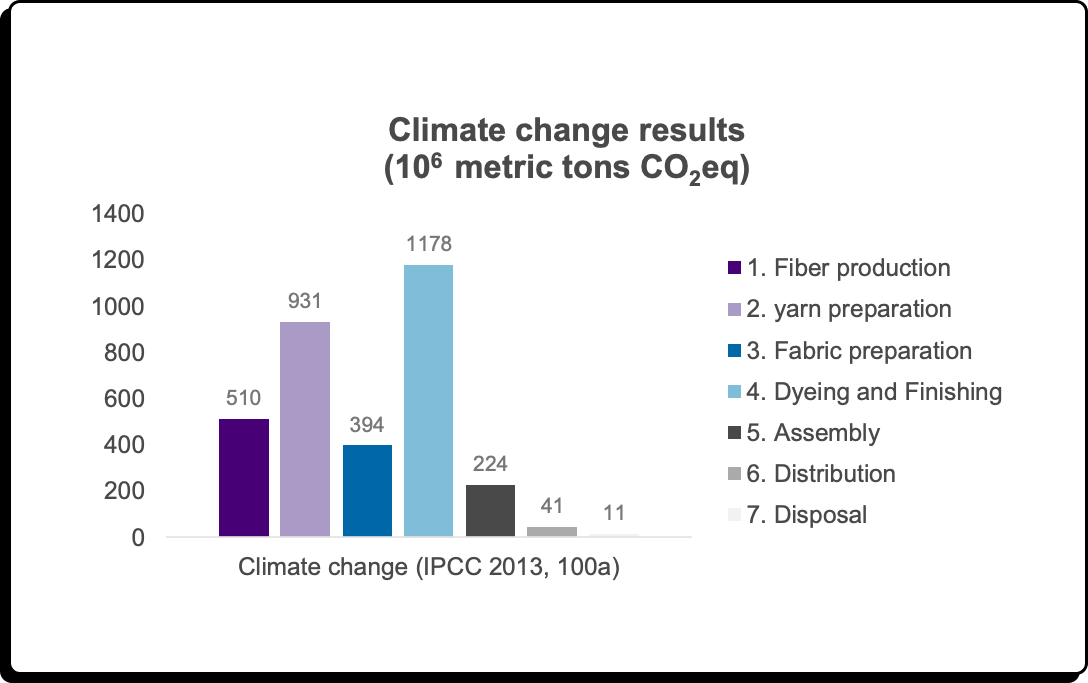
In the fashion industry as a whole, the majority of greenhouse gas emissions (over 60% of total CO2eq emissions) come from two stages of a garment's life cycle: fabric manufacturing from raw materials (28%) and textile processing (dyeing and finishing, at nearly 36%).
Since major manufacturing countries rely heavily on coal and natural gas for their energy production (India, China), industrial fabric manufacturing and dyeing processes—which are highly energy-intensive—are significant sources of greenhouse gas emissions. While the luxury sector, which tends to favor manual production in small artisan workshops, contributes less to this process than fast fashion brands, it is not entirely exempt.

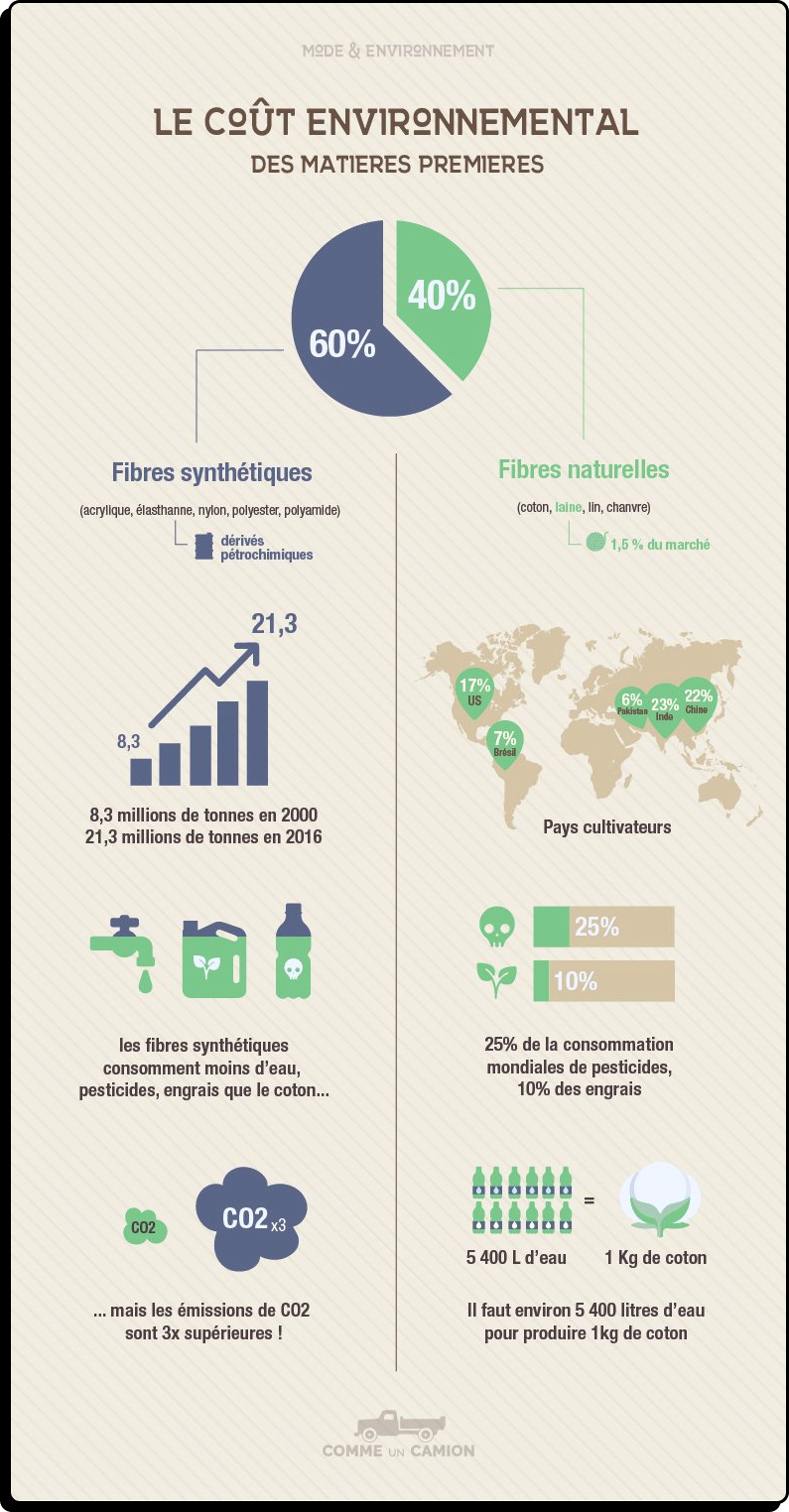
Regarding the raw materials used, those required to make natural fibers like cotton or wool demand enormous amounts of water, pesticides (about 1/4 of global consumption), and arable land. Synthetic fibers like polyester consume much less water during production, but they release about 3 times more greenhouse gases.
When discussing the luxury industry, it is impossible to overlook leather, a material highly prized by the sector for crafting numerous items (clothing, accessories, shoes, handbags, etc.).
While the vast majority of leather produced globally comes from cattle (66%), major luxury brands also value exotic leathers (reptiles, buffalo, etc.), the production of which is often more carbon-intensive than conventional leather and lacks equivalent co-benefits. Whereas bovine leather is often a byproduct of the meat industry, exotic leathers come from animals raised specifically for their skins.
Part of the environmental impact of leather production corresponds to that of livestock farming:
- Significant methane emissions from cattle, a potent greenhouse gas.
- Deforestation caused by the expansion of pastures for livestock.
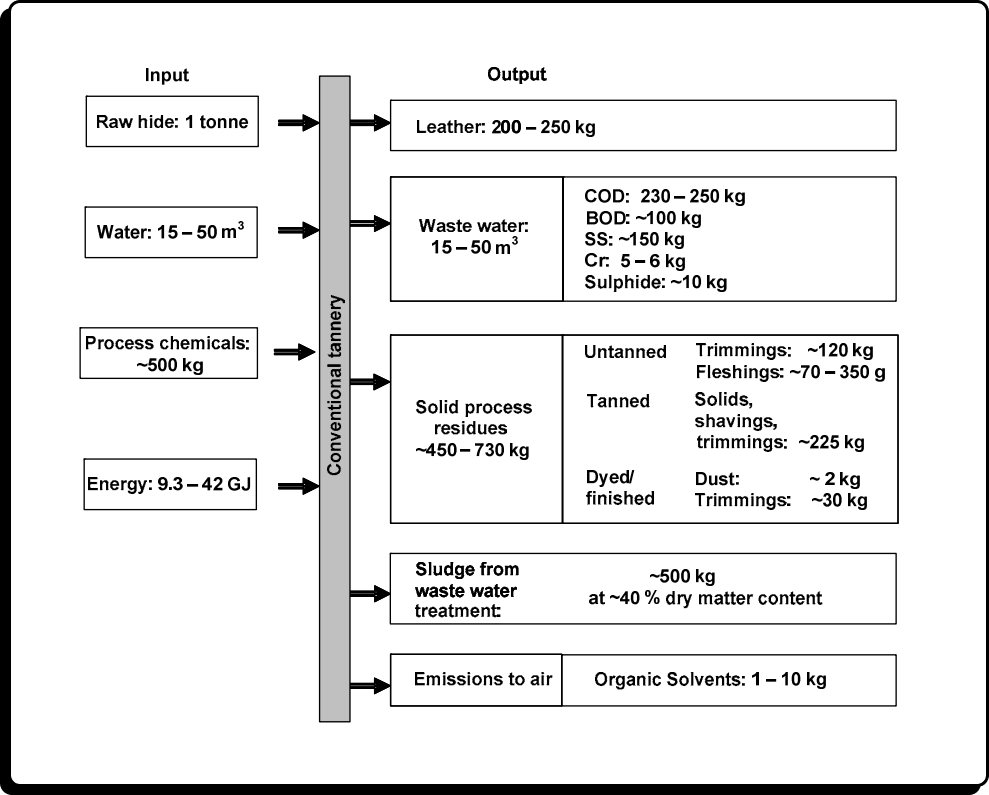
Finally, leather tanning is particularly harmful to the environment. This is the process of transforming raw hide into leather. This water-intensive procedure involves numerous highly polluting chemicals. According to a study conducted by the European Commission's Joint Research Centre, producing 200 to 250 kg of chrome-tanned leather requires 1 ton of raw hide, over 500 kg of chemicals, and 15 to 50 cubic meters of water. The waste generated by this process is also extremely polluting.
Even today, more than 80% of the world's leather is chrome-tanned.
Transportation
In the conventional fashion industry, transportation accounts for only about 1% of a garment's environmental impact, and raw material production (wool, cotton farming, polyester manufacturing, etc.) accounts for only 15%.
Regarding the luxury sector, while products are produced and therefore transported in much more limited quantities, orders are generally shipped to customers by air. Consequently, the share of GHG emissions linked to transportation is significantly higher in the luxury sector due to the over-reliance on air freight, the most carbon-intensive mode of transport.
This applies to the personal luxury market, which is product-focused, but also to a large part of the experiential luxury market, particularly in the context of prestige vacations where the use of commercial flights or even private jets is often part of the experience.
Packaging
Luxury, even in its personal segment, inevitably involves a significant experiential dimension. This experience is reflected in the purchasing process, which must convey a sense of exclusivity, from the location and design of boutiques to the service provided during the sale and, of course, the product… and its packaging.
Packaging is an essential element of the luxury market. While in conventional retail, packaging is largely driven by transport and storage requirements, in luxury, the focus is on the customer experience and conveying brand values. It is an integral part of the product.
Packaging in the luxury market serves as a display case. Beyond the risk of over-packaging, there is the question of raw materials. Customers expect high-quality materials. These two factors therefore have a significant impact on the sector's carbon emissions.
How can the sector be decarbonized?
Having clearly understood the major challenges they face and the growing pressure from consumers regarding environmental issues, major luxury brands are experimenting with solutions aimed at reducing their carbon footprint.
Mastering the value chain
To protect themselves from any scandals that could damage their brand image, many luxury companies have addressed another major climate change issue: controlling the value chain.
Luxury products are generally made from rare or precious materials, and, as previously mentioned, the extraction and processing of these raw materials represent a major climate challenge for the luxury industry. The chemicals used to treat textiles, for example, have serious consequences for the climate.
Major luxury players have therefore engaged more closely with their suppliers to understand their environmental and climate impact and to support them in adopting more sustainable practices.
Kering, LVMH, and Hermès, for instance, have acquired some of their tanneries for this purpose and conduct comprehensive audits of their suppliers to better control their value chain. This auditing has an undeniable effect on these companies' climate impact; Kering, in fact, announced that its strategy initiated in early 2017, which involved numerous audits, has led to an annual reduction of several thousand tons of CO2 emissions.
Managing environmental risks primarily involves auditing suppliers, controlling the value chain, and optimizing resource use. Major luxury houses are seeking to define new sustainable practices for the consumption of water, cotton, and various raw materials whose use or production could be disrupted by climate change. To this end, Kering launched the Clean by Design program, the first phase of which concluded in 2017 after an audit involving 24 textile factories working with the group to optimize resource consumption and ensure production continuity.
The Fashion and Luxury Industry Agreement signed in 2019 by the industry, the Ministry of the Economy, and major French unions, highlights the importance of reliable product traceability regarding environmental issues. This challenge is not only an ecological imperative for these brands but also represents a real opportunity for luxury players.
By controlling their value chain and conducting comprehensive supplier audits, brands can promote more sustainable production methods while also ensuring the long-term viability of their suppliers. Large companies with sufficient funds and a strategic vision can support suppliers in maintaining their unique expertise and help them innovate with new, lower-impact climate processes.
Taking action on sources and types of raw materials
In fashion, it remains difficult to compromise on raw materials for clothing. Design remains highly polluting, and this pollution continues throughout the product's life cycle.
To address this, innovations are emerging to replace traditional materials or reduce their environmental impact.
Chrome tanning is increasingly being replaced by vegetable tanning, which is far less polluting and poses fewer risks to both manufacturers and consumers.
Certain food production waste products, which are much less polluting, are now being used to offer a plant-based alternative to faux leather (such as grape or pineapple) or faux fur (corn). The company Bolt Threads offers a mushroom-based (mycelium) plant alternative to leather and silk, supplying major luxury and fashion brands.
Luxury houses are also contributing to the search for new materials by launching their own initiatives: Matières à penser by LVMH or The Materials Innovation Lab by Kering. The mission of these two structures is to identify sustainable and environmentally friendly alternatives to the raw materials used by their various houses.
Some brands have also embraced upcycling. This is the case, for example, with Gucci and its Gucci Off The Grid line, which uses recycled materials. Other brands like Burberry and Louis Vuitton have also launched collections aimed at developing the circular economy.
Rethinking the shopping experience and the product life cycle
The luxury shopping experience is key to understanding the emission levels generated by this industry. It is therefore a matter of rethinking this experience throughout the product's life cycle.
Consolidating transport methods and reducing air freight may potentially undermine the sense of immediacy sought by some consumers, but it will have a massive impact on the greenhouse gas emission levels generated for each product.
Regarding packaging, it will be necessary to opt for more sustainable materials and aim to reduce the amount of packaging for each product.
To reduce the environmental impact of packaging in the perfume industry, L’Oréal has decided to expand the concept of refillable fragrances, allowing consumers to reuse their bottles. Already adopted by Mugler in 1992—which now generates 40% of its new perfume sales through refills—the process has been extended to other group brands such as Armani, Prada, and Lancôme.
In cosmetics, Chanel has developed the N°1 line, which features eco-designed packaging that is lightweight and partially composed of bio-sourced materials.
These actions certainly require educating and empowering the consumer. This is a paradox in an industry where, more than ever, the customer is king and their demands are practically the rule. Nevertheless, consumer expectations have also evolved, and this applies just as much to the consumption of luxury goods. Younger generations are looking for products and services that combine quality with environmental responsibility. This shift is reflected in both personal and experiential luxury, for example, through the development of low-carbon luxury travel offerings.
Regarding the consumption of luxury goods, while second-hand was once an almost taboo subject in a sector where uniqueness and durability are valued above all else, it has now become a common practice. Luxury thrift stores and clothing rental services are growing without harming the brand image of major fashion houses. On the contrary, thanks to the rise of second-hand in recent years, the consumption habits of luxury clients have become more rational, and the customer base has expanded.
Some brands have even turned this into an asset, such as Stella McCartney, which partnered with the resale company The RealReal to encourage their customers to resell their pieces once they no longer need them.
Integrating sustainable development into governance
Various initiatives and industry coalitions offer analyses of the climate problem and propose solutions to address it. However, major luxury houses are often pioneers in developing this vision of climate change; they are at the forefront of progress, competing in ingenuity and resources to stand out.
Among the major French houses, some stand out, such as Kering, which developed a comprehensive environmental accounting system in 2012, the Environmental Profit & Loss which allows for the analysis of its entire value chain.
The LVMH group, for its part, established an internal carbon fund in 2015. This fund sets an internal carbon price that is revised annually and to which each of the houses within the group is subject. They contribute to this fund in proportion to the greenhouse gas emissions generated by their activities. The purpose of this fund is to finance projects aimed at reducing the group's greenhouse gas emissions.
Also at LVMH, Louis Vuitton committed in 2012 to the LIFE 360 initiative, which sets time-bound goals based on four pillars: creative circularity, biodiversity, climate, and transparency, resulting in a reduction of 500 tons of CO2 equivalent per year.
These changes are reported directly to the management of these groups, who openly present them as an integral part of the company's long-term strategy. It is then up to the individual brands within these groups to implement the strategy internally.
While some innovations are driven by niche brands or start-ups (such as Clear Fashion, which provides insight into a brand's environmental commitment), it is primarily the major groups that set the framework and define the acceptable standards for the entire sector regarding climate change.
These initiatives offer hope for the industry, as major French groups are innovating in this area and proposing models that can be replicated across the rest of the sector. In this sector, it is particularly crucial for these large companies to lead the way; they possess vast resources and are capable of developing a long-term vision. (The Comité Colbert, for example, which brings together 82 of the largest French luxury houses, is looking ahead to 2074). The myriad of smaller players that make up the rest of the sector, including micro-businesses and SMEs, then benefit from the progress made by these French leaders.
Conclusion
Today, luxury industry players are widely aware of environmental issues, and all stakeholders are collaborating to make progress on these matters. Major houses are mobilizing alongside non-profits and public authorities within movements such as the Sustainable Apparel Coalition, the Fashion Industry Charter, and the Fashion Pact.
These national and global collaborations are echoed at the local level, as evidenced by the Paris Good Fashion project, which brings together public, private, and non-profit sector players to make Parisian fashion more sustainable. Galeries Lafayette, the Institut Français de la Mode, the Fédération de la Haute Couture et de la Mode, the Ellen MacArthur Foundation, and the City of Paris have joined forces around local objectives: facilitating exchanges between local players, supporting mid-sized brands and young designers on environmental issues, and making Fashion Week more responsible by using green energy and managing the end-of-life of materials used.
However, the excesses of the luxury industry are still frequently criticized. As a sector accustomed to grandeur and excess, the image of luxury suffers from its high visibility, and the industry must redouble its efforts to ensure its environmental actions are not perceived as paradoxical. Players must therefore continue their transition and rethink their approach at every level to align with the environmental values of their new generation of customers and embody change.
While most of them have now set targets to reduce their carbon footprint, particularly for Scope 3, these are intensity-based targets. This approach tends to decouple their revenue from their carbon footprint by focusing on the impact of the product or service rather than the company as a whole. Reducing their absolute carbon footprint would require lowering production volumes and, ultimately, increasing prices. This is an approach that few industries, other than luxury, can afford by leveraging the scarcity effect inherent to this sector.
Sources:
- “Global powers of luxury goods 2023”, Deloitte, 11/29/2023
- “The luxury market is expected to grow by 5 to 7% annually until 2030”, CBNews, 11/15/2023
- “The global luxury market is set to reach a record value of 1.5 trillion euros in 2023; consumers are once again seeking luxury experiences”, Bain & Company, 11/14/2023
- “True Luxury Global Consumer Insight 2023”, BCG & Altagamma, 07/05/2023
- “Luxury & transport decarbonization: best practices for reliable and actionable GHG emissions calculation” Sightness, 06/08/2023
- “On the road to eco-responsible luxury? The industry is undergoing a sustainable revolution”, Forbes, 01/25/2023
- “Refillable, no-rinse products… how L’Oréal is lightening its carbon footprint”, We Demain, 12/20/2022
- “The leather industry faces the difficult equation of sustainable transition”, Fashion Network, 09/13/2022
- “Luxury packaging market analysis 2021-2026”, Luxus +, 04/06/2021
- “Key figures for the luxury market in 2022 - 2023”, Alioze, 09/11/2020
- “Gucci Off the Grid”, Equilibrium (Gucci), 06/15/2020
- “Strategic Sector Contract for Fashion and Luxury 2019-2022”, National Industry Council, 2019
- “Why has fashion become one of the most polluting industries?”, Comme un Camion, 09/02/2018
- “Measuring Fashion”, Quantis, 03/2018
- “A New Textiles Economy: Redesigning fashion’s future”, Ellen MacArthur Foundation, 11/28/2017
- “How does the internal carbon fund work?”, LVMH, 11/09/2015
- “Best Available Techniques (BAT) Reference Document for the Tanning of Hides and Skins”, Joint Research Centre (European Commission), 2013
- “Future Trends in the World Leather and Leather Products Industry and Trade”, Leather Panel (UNIDO), 2010