
.svg)








🔎 Key takeaways
Please note: This article concerns French legislation. The requirements described may not apply in other countries.
Nous vous proposons de faire le point sur les principales échéances règlementaires de cette année 2026 et sur les évolutions règlementaires à surveiller.
Dématérialisation de la déclaration des accidents/incidents ICPE
Les exploitants d’ICPE doivent désormais transmettre sur la plateforme https://entreprendre.service-public.gouv.fr/vosdroits/R71939
- la déclaration des accidents ou incidents survenus du fait du fonctionnement de l'installation, susceptibles de porter atteinte aux intérêts protégés ;
- le rapport d'accident ou d'incident.
Nota : Doivent être transmis sous forme non dématérialisée :
- les informations relatives aux installations relevant de la défense ;
- les informations susceptibles de porter atteinte à des intérêts confidentiels.
Nouvelle filière REP des emballages professionnels
La nouvelle filière REP emballages professionnels entrera en vigueur au 1er juillet 2026.
Les entreprises utilisant des emballages doivent identifier s’ils sont considérés comme le producteur de l’emballage (voir règlement PPWR) et si celui-ci est un emballage professionnel (voir notamment arrêté périmètre).
Les producteurs d’emballages professionnels devront :
- Soit mettre en place un système individuel agréé,
- Soit adhérer (au niveau entreprise) à un éco-organisme titulaire d'un agrément pour la filière emballages professionnels.
De nombreuses entreprises vont ainsi être concernées par cette nouvelle filière REP.
Pour en savoir plus, découvrez notre article sur la Responsabilité Elargie du Producteur (REP)
Passeport de prévention employeur
Le passeport de prévention sera accessible aux employeurs au 16 mars 2026.
Les employeurs devront déclarer les formations réalisées en interne et s’assurer, pour les formations réalisées en externe, que l’organisme de formation a bien déclarer la formation.
Nous vous invitons à vérifier la prise en compte de ce sujet avec vos services RH.
Pour en savoir plus, découvrez notre article sur le passeport de prévention
Ombrières sur les parkings
Les parcs de stationnement extérieurs d'une superficie supérieure ou égale à 10 000 m² existants au 1er juillet 2023 devront être équipés au 1er juillet 2026 sur la moitié de leur superficie
- soit d’ombrières intégrant un procédé de production d’énergies renouvelables sur la totalité de leur partie supérieure assurant l’ombrage ;
- soit de procédés mixtes correspondant à une part d'ombrières couvrant au moins 35 % de la moitié de la superficie du parking et des dispositifs végétalisés concourant à l’ombrage de la surface restant à couvrir ;
- soit en tout ou partie, un dispositif de production d’énergies renouvelables ne requérant pas l’installation d’ombrières, sous réserve que ce dispositif permette une production équivalente à celle qui résulterait de l’installation d’ombrières intégrant un procédé de production d’énergies renouvelables mis en place sur la superficie non équipée.
Des exemptions sont possibles (critères économiques, techniques, …).
Il est également possible de reporter sous conditions ce délai au 1er janvier 2028.
Réalisation d’un audit énergétique pour les entreprises nouvellement concernées
La réalisation d'audit énergétique est désormais obligatoire pour les entreprises qui n'ont pas mis en place de SMÉ lorsque leur consommation annuelle moyenne d'énergie finale est supérieure à 2,75 GWh. Ces audits sont à réaliser tous les 4 ans.
Pour les entreprises qui n’étaient pas soumis suivant les anciens critères, le premier audit est à réaliser au plus tard au 11 octobre 2026.
Rappel des anciens critères : 250 salariés ou chiffres d’affaires annuel supérieur à 50 millions d’euros ou et son bilan est supérieur à 43 millions d’euros
Pour en savoir plus, lisez notre article sur le nouveau périmètre des audits énergétiques et du SME
Mise en place d’un système de management de l’énergie certifié
Un système de management de l'énergie (SMÉ) doit être mis en œuvre dans les entreprises dont la consommation annuelle moyenne d'énergie finale est supérieure ou égale à 23,6 GWh. Il est certifié par un organisme de certification accrédité. LE SMÉ doit être certifié au plus tard au 11 octobre 2027.
La mise en place d’un tel système doit être anticipé dès cette année pour les entreprises concernées.
A note que sont exemptés de l’audit :
- les entreprises qui ont mis en place un système de management environnemental conforme à la norme ISO 14001 : 2015 / Amd. 1 : 2024 ou à toute autre norme équivalente, lorsque ce système est certifié par un organisme accrédité et qu'il intègre un audit énergétique équivalent à celui prévu par la réglementation ;
- les entreprises mettant en œuvre un contrat de performance énergétique (CPE).
Pour en savoir plus : https://www.tennaxia.com/blog/nouveau-perimetre-des-audits-energetiques-et-du-sme
Végétalisation ou solarisation des toitures des bâtiments existants
Au plus tard au 1er janvier 2028, tous les bâtiments ou parties de bâtiments à usage commercial, industriel, artisanal ou administratif, bâtiments ou parties de bâtiments à usage de bureaux ou d'entrepôt, hangars non ouverts au public faisant l'objet d'une exploitation commerciale, hôpitaux, équipements sportifs, récréatifs et de loisirs, bâtiments ou parties de bâtiments scolaires et universitaires et parcs de stationnement couverts accessibles au public les bâtiments ou les parties de bâtiments existant à la date du 1er juillet 2023 et ayant une emprise au sol au moins égale à 500 mètres carrés doivent intégrer :
- soit un procédé de production d'énergies renouvelables ;
- soit un système de végétalisation basé sur un mode cultural ne recourant à l'eau potable qu'en complément des eaux de récupération, garantissant un haut degré d'efficacité thermique et d'isolation et favorisant la préservation et la reconquête de la biodiversité ;
- soit tout autre dispositif aboutissant au même résultat.
A l’heure actuelle, seules les exemptions en lien avec les ICPE ont été définies.
Les textes définissant les critères d’exemption, notamment économique ou technique, sont attendus.
Dès leurs parutions, les entreprises devront vérifier s’ils répondent aux exemptions ou prévoir les travaux de mise en conformité.
Nouvelle valeur limite d’exposition professionnelle (VLEP) pour l’acrylonitrile
La VLEP contraignante pour l’acrylonitrile (N° CAS : 107-13-1) entre en vigueur au 5 avril 2026 :
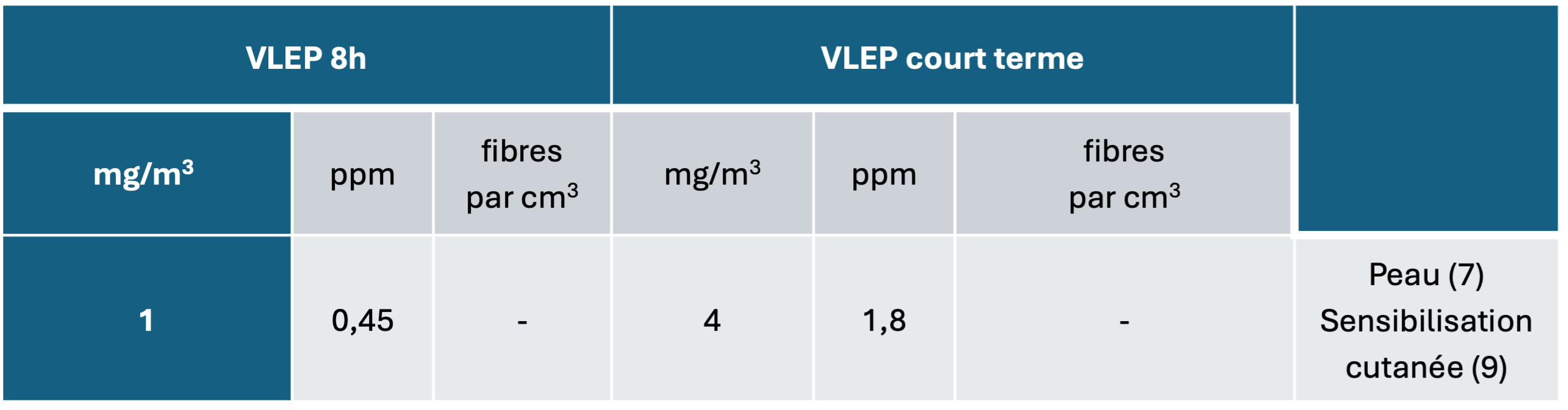
L’acrylonitrile étant une substance classée CMR 1B, un contrôle annuel par un organisme accrédité de cette VELP sera à mettre en place.
Nouvelles dispositions concernant le transfert transfrontalier de déchet
Ces nouvelles dispositions, fixées par le règlement (UE) 2024/1157 du 11 avril 2024, entre en vigueur au 21 mai 2026.
Sont notamment interdit les transferts de déchets pour élimination au sein de l’Union européenne (hors exemptions) et les exports de déchets plastiques vers les pays non-membres de l’OCDE.
Une plateforme centralisée permet la numérisation de l'échange d’informations et de données sur les transferts de déchets dans toute l’UE.
Etiquetage des équipements de lutte contre l’incendie contenant des PFAS
A compter du 23 octobre 2026, lorsque la concentration de la somme de tous les PFAS est supérieure à 1mg/L, des obligations d'étiquetages s'appliquent :
- aux mousses anti-incendie mises sur le marché, à l’exclusion des extincteurs portatifs,
- pour les utilisateurs, aux stocks de mousses anti-incendie non utilisées, ainsi qu'aux déchets contenant des PFAS, y compris les eaux usées, provenant de l'utilisation de ces mousses.
L'étiquetage, qui doit être visible, lisible et indélébile, comporte la mention suivante : «AVERTISSEMENT: Contient des substances per- et polyfluoroalkylées (PFAS) à une concentration égale ou supérieure à 1 mg/L pour la somme de tous les PFAS».
Pour en savoir plus, lisez notre article sur l'interdiction des PFAS dans les mousses anti-incendie
Rejets des PFAS
Un arrêté a imposé des campagnes de mesure de PFAS à certaines ICPE à autorisation. A la suite de ces campagnes, des actions de suppressions à la source ont été lancées afin de réduire les émissions de PFAS d’origine industrielle.
La mise en œuvre d’une réglementation relative à la surveillance des PFAS dans les rejets aqueux industriels devrait se généraliser.
Une rubrique ICPE spécifique pour les batteries ?
Des travaux réglementaires sont en cours pour la mise en œuvre d’une rubrique ICPE 2926 spécifique pour les batteries avec des arrêtés associés. Des consultations sont attendues prochainement.
Digitizing DASRI tracking slips?
Digitizing tracking slips for DASRI (infectious clinical waste) on the Trackdéchet platform has been an option since June 2023. It is eventually set to become mandatory, but we are still awaiting the regulatory texts.
Strengthening provisions for IED installations
The transposition of Directive 2024/1785 of April 24, 2024, is expected before July 1st , 2026.
To strengthen the rules regarding the integrated prevention and reduction of pollution from industrial activities, this directive has introduced amendments to the IED Directive, notably by expanding its scope to include new activities and more intensive livestock farming, and by reinforcing or imposing new requirements.
Among these provisions, note the requirement to audit the environmental management system before July 1st , 2027.
| Topic | Deadline | Issue / obligation for companies |
|---|---|---|
| Energy & Buildings | July 1, 2026 | Mandatory installation of solar canopies or greening over half the surface area of existing parking lots larger than 10,000 m². |
| October 11, 2026 | First mandatory energy audit (to be renewed every 4 years) for companies consuming more than 2.75 GWh/year. | |
| October 11, 2027 | Mandatory certification of an Energy Management System (EnMS) for sites consuming more than 23.6 GWh/year. | |
| January 1, 2028 | Requirement to add solar panels or greening to the roofs of existing buildings larger than 500 m² (commercial, industrial, office). | |
| Waste & Circular Economy | May 21, 2026 | New EU rules come into force banning the export of plastic waste outside the OECD and digitizing transfer records. |
| July 1, 2026 | Launch of the new Extended Producer Responsibility (EPR) scheme dedicated to commercial packaging. | |
| HR & Health | March 16, 2026 | Employer access opens to the Prevention Passport (mandatory declaration of safety training). |
| April 5, 2026 | Application of the new binding Occupational Exposure Limit Value (OELV) for acrylonitrile (a CMR substance). | |
| Chemical Risks (PFAS) | October 23, 2026 | Mandatory specific labeling for stocks of firefighting foam and waste containing PFAS (> 1mg/L). |
| To watch (2026) | Broader rollout of monitoring and source-elimination plans for industrial PFAS wastewater discharges. | |
| Classified Installations (ICPE / IED) | Immediate | Mandatory digital filing of ICPE accident/incident reports on the official Service-Public platform. |
| July 1, 2026 | Transposition of the amended IED directive (stricter environmental requirements and EnMS audits before July 2027). | |
| To watch (2026) | Upcoming consultations on the creation of a new ICPE category (No. 2926) fully dedicated to batteries. |
Conclusion
If you haven't already, we recommend incorporating these topics into your action plans and budgets, and staying alert to regulatory developments coming in 2026.