
.svg)







In recent weeks, some observers have expressed alarm at the rise of what we must now call sustainability reporting, with the launch of the Corporate Sustainability Reporting Directive (CSRD). Too time-consuming, too much data to collect, consolidate, and publish. Conversely, too few human, technical, and financial resources to dedicate to it... Has sustainability reporting become the black sheep of CSR? In any case, it is capturing everyone's attention!
During this Six Nations tournament, the French team's fantastic victory against England was hailed as a return to basics—a term dear to those who play and love the game of rugby. While sustainability reporting is not an end in itself, it is one of the fundamentals of Corporate Social Responsibility (CSR). It serves as the foundation for managing CSR policies, just as it is the basis for sharing information and data with a company's stakeholders.
Sustainability reporting in the service of CSR
From non-financial reporting to sustainability reporting , including CSR reports, sustainable development reports, and the Non-Financial Performance Statement (DPEF), this evolution is no accident. It reflects the evolution of CSR itself: from a normative CSR that was subject to French regulatory requirements, later transposed into European law, to a time when CSR was often viewed as a communication opportunity rather than a lever for transformation.
The transposition of the European Directive of October 22, 2014, on the disclosure of non-financial information into the DPEF, via Ordinance No. 2017-1180 of July 19, 2017, and Decree No. 2017-1265 of August 9, 2017, was intended to set companies on a new path. Its "materiality" approach was intended to anchor CSR in its contribution to overall corporate performance, thereby generating greater relevance and utility for both companies and their stakeholders.
The four years of DPEF implementation have undoubtedly led to progress. However, the concept of performance has not consistently been accompanied by more frequent collection of key management indicators. According to the 10th Tennaxia study on non-financial reporting practices and reports, the frequency of reporting KPIs to governance bodies remains annual for 55% of the companies surveyed, semi-annual for 12%, and quarterly for 22%.
This highlights the difficulty of integrating CSR throughout the entire company—across its operational and functional departments—and ensuring it is systematically taken into account in decisions and actions, as ISO 26000 intended in its very definition of CSR. Specifically, while many are questioning—and, it must be said, criticizing—the profusion of indicators, key management indicators, and other Key Performance Indicators (KPIs), how can we do without them to attest to the implementation of environmental, social, and ethical policies? Without them, how can we account for what has been done and what remains to be done?
In a recent LinkedIn post, Dominique Steiler, senior professor and holder of the UNESCO Chair for a Culture of Economic Peace at Grenoble Ecole de Management, commented on the illustration below, saying: "We often confuse management tools with reality, which leads us to 'manage by indicators' instead of taking care of the company's lifeblood. While tools are useful for understanding and deciding, they require discernment above all else."
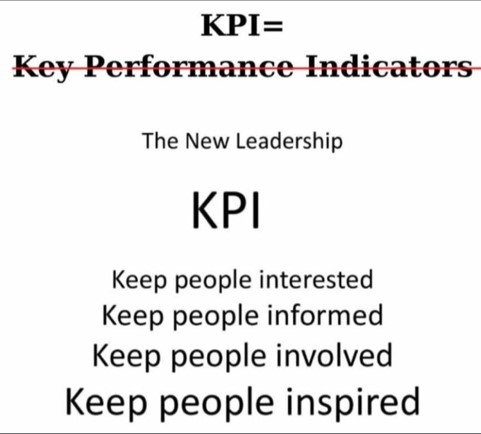
Discernment! Yes, that is exactly what it is about. Identifying the right KPIs—that is, those that are material. Explaining them to those who will be responsible for implementing the actions that need to be measured and managed, and therefore also explaining them to those who will be responsible for collecting the data.
Measure, because "what gets measured gets improved" (William Edwards Deming, a theorist of continuous improvement). While keeping teams interested, informed, involved, and inspired is an excellent management practice—a guarantee of relevant leadership that is fulfilling for the men and women of the company—should we be satisfied with merely stating it to convince ourselves of its deployment and the achievement of our goals? Certainly not. No more than we can be satisfied with CSR policies that are merely posted on walls without being able to see their effects; illustrating them with a few actions is not enough.
Discernment, therefore, in the choice of key performance indicators. "Less but better" would be a worthy motto for today's DPEFs and tomorrow's CSRDs to prove the effectiveness of CSR policies.
The CSRD: sustainability reporting finally at the service of corporate transformation
The CSRD sounds the death knell for rearview-mirror reporting, with its annual collection cycles and lack of commitment to specific objectives. The CSRD aims to both foster the transition of European companies toward a sustainable global economy and improve financial flows toward sustainable activities within the European Union.
Improving the content of non-financial reports—now sustainability reports—is the sine qua non for the success of the ecological transition sought by the CSRD. Companies will be required to communicate data and information regarding sustainability issues identified through a double materiality analysis. This data must allow for the assessment of the impact of their activities on the environment and society at large, as well as the risks and opportunities that this environment and society pose to their business model and, consequently, their sustainability.
With the CSRD, which focuses on transformation reporting and thus on reporting companies' commitment to this energy and social transition, environmental, social, and governance (ESG) information is set to become a key indicator of corporate economic performance, with strong connectivity between financial and non-financial statements for both financial actors and all stakeholders.
The 12 ESRS (European Sustainability Reporting Standards), developed by EFRAG, define the reporting requirements for the upcoming CSRD and propose a reporting architecture based on:
- 3 levels of information: agnostic, sector-specific, and entity-specific,
- 4 reporting areas: governance involvement in sustainability issues, strategy including risks and impacts, deployment, and performance measurement
- 3 themes: environment, social, and governance.
Performance measurement brings us to the reporting process, data collection, and management, which are at the heart of the concerns for the various stakeholders impacted by the CSRD, first and foremost the companies themselves.
According to a study conducted by the C3D, while "managing and measuring CSR performance is the 4th priority for CSR departments (91% of respondents), and formalizing non-financial reporting to account for CSR performance ranks 5th (81%), only 31% of respondents have mature indicators that are defined globally and implemented locally... 55% of the companies surveyed, ranging from small businesses to large corporations, do not have a reporting tool for their non-financial performance."
Consequently, the majority of respondents appear insufficiently equipped to manage their company's sustainable performance, or to manage and report on their company's transformation, even though data is set to become inseparable from commitments to trajectories and the success or failure of their implementation.
In other words, data is destined to become the measure of action; it will have to provide proof of the company's concrete transformation during annual publication and will, on an ongoing basis, form the foundation for managing the transition underway. Provided, of course, that it is easily accessible.
Sustainability reporting software solutions are now becoming an essential tool for CSR/sustainability departments, Chief Impact Officers, and Chief Value Officers to manage their CSR/ESG strategy and report on it to their company's governance bodies and stakeholders.
In conclusion
One of the objectives of the CSRD is to improve transparency for all stakeholders in order to redirect investments toward more sustainable technologies and companies.
Data quality and the ease of collection, consolidation, and management are major challenges. For example, the Science Based Targets initiative (SBTi) is chosen by many companies that want to attest to the robustness of their greenhouse gas emission reduction commitments. After validating these commitments, these companies must report on the compliance of their actual trajectory against the trajectory announced in their SBT commitment. Some observers have noted that this reporting has sometimes been lacking.
It is no longer enough to just talk about it. You must back up your claims with robust data that accurately reflects the reality of ESG commitments in sustainability reports.
Photo credit: