.svg)





In brief
Discover 5 eco-friendly alternatives to flying from Paris, using the European night train network to travel without significantly increasing your carbon footprint.
- Crossing the Arctic Circle by sleeper: Head for wild Lapland and the Lofoten archipelago via the incredible Arctic Circle Train, to experience the thrill of the Northern Lights and the midnight sun.
- Fall asleep in London, wake up in the Highlands: A swift journey aboard the legendary Caledonian Sleeper to reach the haunted castles, mysterious lochs, and distilleries of Scotland.
- Treat yourself to a thermal night in Budapest: An affordable night getaway through Central Europe to immerse yourself in Europe's most beautiful baths and experience its unique nightlife.
- Dive into Berlin's underground scene: A smooth and eco-friendly journey to soak up modern history, the remnants of the Wall, and the alternative culture of the techno capital.
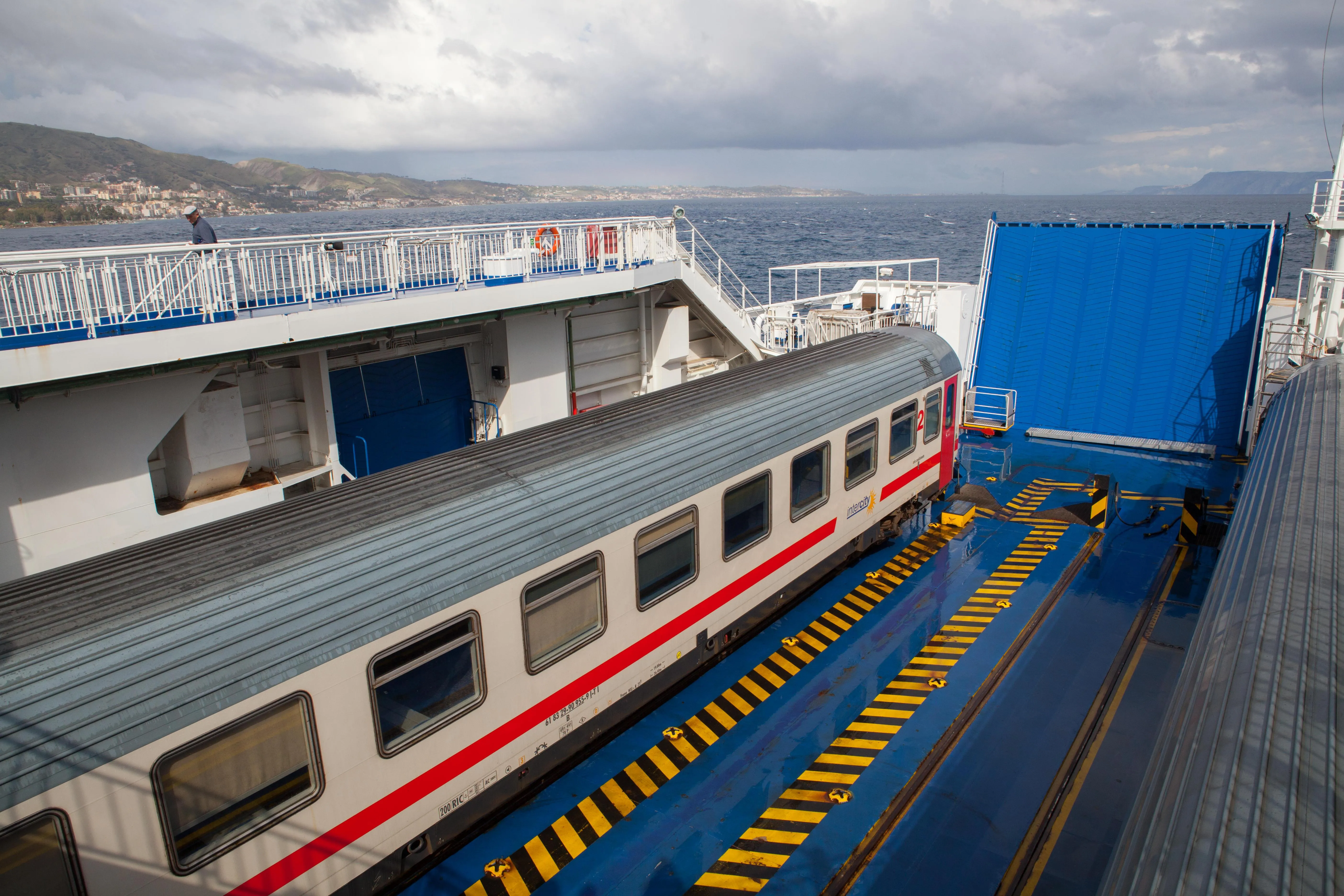
- Board a train... onto a ferry to Sicily: The ultimate adventure to the Mediterranean sun with a unique crossing where the train cars roll directly onto the ship to take you to the coves of Palermo.
Keep traveling long distances or give up flying?
Such is the internal conflict that resonates in the hearts of travelers when they realize the carbon impact of air travel.
And yet, when you delve a little deeper into the (impressive) map of the European rail network, you discover that it's possible to reach certain distant destinations without flying, traveling comfortably and without having to take days off (or almost) to compensate for the journey's length. Thanks to night trains.
A mode of transport that gradually disappeared over the years, the night train is making a strong comeback, driven by the strong consumer demand for low-carbon travel.
- Leave Paris in the late afternoon and wake up in Scotland the next morning?
- Cross the Arctic Circle and see the Northern Lights from your sleeper?
This is now possible. This article aims to present 5 itineraries that will allow you to reach several European destinations exotic, once only accessible by plane.
Please note, the destinations and itineraries were selected based on 3 criteria:
- These are destinations that most travelers currently reach by plane.
- At least 2/3 of the journey takes place on a night train. This criterion is essential, as it's what makes this journey comfortable despite its length (sometimes several tens of hours).
- All proposed itineraries depart from Paris, France. However, it is of course possible to connect to the departure of the various night trains from other European capitals.
Enjoy your read and your journey!
1. Norwegian Lapland: Arctic Circle and Northern Lights

The first suggested itinerary takes you to Scandinavian Lapland, specifically the Lofoten archipelago, a small paradise on Earth located in northern Norway.
A destination previously only accessible by plane, the recent launch of the Hamburg → Stockholm night train, operated by SJ, changes everything.
Be warned, the Northern Lights are earned : You're going to have to take a 35-hour train journey to reach this remote destination. Fortunately, a large portion of the journey is by night train, with very comfortable berths (27 out of 35 hours, to be precise).
But as you'll see, it's worth the effort.
What to do in Lapland?
Lapland is a region that stretches across northern Norway, Sweden, and Finland.
An adventure destination, people go there to admire the wonders of nature and the wild far north.
As you might expect, the season is an important factor to consider when planning a trip to Lapland.
Here's a summary of what this region offers.
- Northern Lights (winter only, October to March): Lapland is one of the best (if not the best) places in the world to admire the Northern Lights. Indeed, it is located under the "aurora belt," which is the area where auroras appear most frequently.
In other words, if you have clear weather, you could potentially observe the Northern Lights every evening.
- Midnight Sun: Settle down on a northwest-facing beach and enjoy the sunset. The sun slowly descends... and gently begins to turn right. It won't disappear, but rather skirt the horizon to reappear behind you, in the east! This "eternal day" is called the "Midnight Sun". To observe it, you need to go beyond the Arctic Circle between early June and mid-July. More broadly, it never truly gets dark between May and August.
Finally, the destination offers most of the typical "Nordic" activities of Lapland: dog sledding, skiing, hiking, etc.
How to get to Lapland by train?

Step 1: Paris Gare de l'Est → Hamburg Central Station
To get there, the simplest option is to first reach the city of Hamburg in Germany. The journey is easy by train (several trains depart from Paris Gare de l'Est daily, with a change in Frankfurt) and takes approximately 7 hours. You can book your ticket on any train ticket booking website (SNCF, Trainline, etc.).
We recommend planning to arrive in Hamburg before 7 PM, to allow for a safety margin so you don't miss your night train.
Step 2: Hamburg-Altona → Stockholm Central
This time, it's the big departure for Scandinavia.
To get to Stockholm from Hamburg, you need to take the night train departing from Hamburg-Altona, which is about a 20-minute metro ride from Hamburg Central Station (factor this into your connection time)
The night train departs at 9:19 PM and arrives at 9:55 AM at Stockholm Central.
To buy tickets, you need to go to the website of the Swedish railway company: https://www.sj.se/en
You can buy several types of tickets:
- Standard seated tickets (the cheapest but least comfortable option)
- Sleeper cabin tickets (4-berth or 2-berth)
The train will pass through northern Germany, Denmark, then reach Sweden via the gigantic Øresund 'bridge-tunnel', which connects Copenhagen to Malmö.
You will wake up to a landscape of forests and lakes (frozen in winter), before arriving in Stockholm at 9:55 AM.
Intermediate Stop: A day in Stockholm.
Your next night train, to reach northern Norway departs at 6:10 PM from Stockholm Central Station. So you have a good day to visit the city.
If you wish to store your luggage, there is a luggage storage area 5 minutes from the platform. You can drop off your luggage independently. Also, note that the storage area offers 'large format' lockers if you have a big suitcase or skis.
As the station is right in the heart of Stockholm, you can easily access the main monuments and tourist areas on foot.
Stage 3: Stockholm Central → Narvik (Norway)
Here is the final stage of the journey, the famous “Arctic Circle Train” ! It is one of Europe's longest night trains: An 18-hour train ride connecting Stockholm to Narvik, the gateway to the Lofoten Islands archipelago.
The last leg of the journey is renowned as one of Europe's most beautiful: you'll spend 1.5 hours traversing mountainsides amidst Norwegian fjords. Sublime landscapes in both summer and winter.
Departing Stockholm station at 6:10 PM and arriving in Narvik midday at 12:35 PM.
As with the previous train, several options are available: reclining seats, 6-berth cabins, 3-berth cabins (which can be booked for 2 people), or even 1 or 2-person cabins with private washbasin and toilet.
The train also offers a dining car (which, frankly, offers extremely poor value for money).
To purchase tickets, you need to visit the website of the Swedish railway company: https://www.sj.se/en
You've arrived in Narvik, the gateway to the Lofoten Islands!
Several options are available to you: travel to the town of Reine by bus from Narvik, head further north to explore the Tromsø region, enjoy a ski session at Narvik ski resort (open all year round), etc.
Tips for observing the Northern Lights:
If the main goal of your trip is to see the Northern Lights, be aware thatit's easier to observe them from inland areas than from the coast, especially since coastal weather in winter can be quite unpredictable.
Therefore, to make the most of the region while increasing your chances of seeing them, we recommend stopping for a few days in Abisko or Kiruna, two Swedish towns served by the Arctic train. Both towns offer 'chalet-style' accommodation in nature and all kinds of tourist infrastructure. Don't hesitate to stop there for 3 or 4 days before continuing your journey to Narvik, via the Arctic train.
To find out if you have a chance of seeing the Northern Lights, download the app "Northern Lights Alerts". Very easy to use, the app indicates the probability of seeing the Northern Lights if the sky is clear, based on your location.
2. Scotland: distilleries, castles, and bagpipes

The second journey takes you to Scotland, thanks to the overnight train Caledonian Sleeper.
The Caledonian Sleeper connects London to several Scottish destinations, including Edinburgh, Glasgow, Inverness, Aberdeen, and Fort William.
The practical advantage of this journey is its speed: Departing from Paris in the late afternoon, you'll arrive in Scotland the next morning.
An express journey to the sound of bagpipes, distilleries, and the wild nature of the Highlands. A tip: book in advance!
What to do in Scotland?
Scotland offers a wide variety of landscapes and things to discover.
Highlights include Edinburgh, the Scottish capital, with its iconic castle and cobbled streets; Loch Ness, famous for its mysterious monster; the Highlands, with their spectacular mountainous landscapes; the Isle of Skye, known for its breathtaking scenery; and the historic city of Stirling, with its castle and William Wallace Monument. Scottish whisky distilleries are also popular attractions for spirits enthusiasts.
How to get toScotland by train?

Step 1: Paris Gare du Nord → London St Pancras
The simplest (and lowest carbon) option to get to London is, of course, the Eurostar, which departs from Gare du Nord in Paris and arrives at St Pancras International in London.
Eurostar trains depart at regular intervals throughout the day.
Two tips:
- Make sure to book your tickets in advance, as prices can vary significantly (from €45 for a single journey to €300...).
- Please note that it takes about fifteen minutes to get to London Euston station (departure point for the night train) from St Pancras.
Important! Since Brexit and the strengthening of customs controls it is necessary to arrive at the station a good hour beforehand (check-in closes 45 minutes before the train departs).
Step 2: London Euston → Scotland
Once you arrive at London Euston station, you can board one of the night trains of the Caledonian Sleeper.
Please note that the company operates several trains (Edinburgh, Glasgow, Fort William, etc.) which do not depart at the same time.
For example, if you wish to travel to Fort William, the gateway to the Highlands and the closest town to the Isle of Skye, you will need to take the 9:15 PM train.
So, make sure to check your train's schedule when booking your Eurostar.
Caledonian Sleeper trains offer several comfort levels: Seats, Twin Cabins, and Single Cabins. There is also a dining car, and it is possible tobring your bike on the train.

Finally, a quick tip:
As Caledonian Sleeper prices are very high, it is highly recommended to get a discount card. It will give you a 30% discount across the network. Essential if you are traveling with others. And most importantly, book in advance!
To book your train ticket, click here: https://www.sleeper.scot/
3. Budapest: thermal baths, architecture, and nightlife

Capital of Hungary, Budapest is probably one of the most interesting cities to visit in Eastern Europe, particularly for its architecture, thermal bath culture, and nightlife renowned throughout Europe.
Despite its distance, Budapest is a very easy city to reach by train: Departing from Paris in the mid-afternoon, arriving the next day at 9 AM in Budapest. Just one change: Zurich.
What to do in Budapest?
As mentioned above, Budapest's main appeal lies in the variety of activities [SEG 10] For those who enjoy sightseeing: strolls along the
banks of the Danube and admiring iconic landmarks such as the Hungarian Parliament and Buda Castle. For those who want to enjoy Budapest's thermal baths:
Gellért and Széchenyi are the most famous and beautiful. Luckily, they are quite large (especially Gellért), which makes the experience pleasant even during peak tourist season. If you're lucky, you might even be able to attend the famous night parties in the baths… These only happen a few times a year, before the pools are drained. If this is a must-do for you, inquire beforehand to catch the right weekend. Finally, don't forget to try Hungarian specialties such as
Goulash andkürtőskalács.
How to get to Budapest by Train?

Step 1: Paris Gare de Lyon → Zurich
Our first step is to take the TGV Lyria between Paris and Zurich. No surprises here, this is a standard TGV service. You can take the train around 4 PM to arrive in Zurich around 8 PM and catch the night train that departs at 9:40 PM.
Alternatively, take an earlier train and enjoy your day in Zurich. The station is located right in the city center, and luggage lockers are available, making it ideal if you want to visit the city.
Step 2: Zurich → Budapest
The night train connecting Zurich to Budapest, the Wiener Walzer, departs at 9:40 PM from Zurich station.
Like most night trains, various comfort options are available: seats, couchettes, and private couchettes. One of the advantages of this train is its low cost compared to other night trains. Expect to pay around €60 for a couchette journey including breakfast. For the most premium options, you'll pay around a hundred euros.
To book your tickets, visit the website of the Austrian railway company (yes, they operate the route, even though we only pass through their country). Here's the link: https://www.oebb.at/en/

4. Berlin: modern history, alternative culture, and nightlife
.webp)
For this 4th trip, we're heading to Berlin, a relatively unknown capital city, untouched by mass tourism.
Since the rise of low-cost flights about ten years ago, Berlin has become a popular destination for electronic music and alternative culture enthusiasts.
It's a destination that's easily accessible and inexpensive if you plan ahead.
We do regret the discontinuation of direct Paris → Berlin night trains (which were stopped around 2010). However, given the renewed interest in this mode of transport, we can hope that the route will soon be reinstated.
What to do in Berlin?
Known for its nightlife, the city is especially renowned for its underground scene and electronic music. However, Berlin also boasts a a very rich cultural and historical heritage, which differs from what we are used to seeing in Europe because the events associated with it are recent.
Several monuments and museums will allow you to delve back into its history, from the end of the Second World War until the fall of the Berlin Wall, whose remnants still crisscross the city.
It is also an ideal destination for art lovers, between the Pergamon Museum and Museum Island. Finally, the city boasts absolutely unique architecture, with a striking contrast between the former West / East blocks and historic buildings like the Brandenburg Gate and the Reichstag.

How to get to Berlin by train?
Step 1: Paris Gare de l’Est → Mannheim
The first step is very simple: Departure from Paris Gare de l’Est for Mannheim.
The journey takes approximately 3 hours and can be operated by either SNCF or Deutsche Bahn. (Note that Deutsche Bahn trains are more comfortable).
The night train to Berlin departing from Mannheim at 11:40 PM, so you can take the 7:06 PM train to arrive in Mannheim at 10:17 PM.
Step 2: Mannheim → Berlin
Since Deutsche Bahn discontinued its night train service, OBB, the Austrian company, has been handling night connections in Germany. This is via the famous "Nightjet".
This train offers a wide variety of classes: Seats, compartments for 1 to 6 people, deluxe compartments, etc. Prices vary, but the starting price for a couchette is €59 (6-berth compartment).
The train departs Mannheim at 11:42 PM and arrives in Berlin at 7:54 AM, at dawn.
To buy tickets, visit the OBB website: https://www.oebb.at/en/

Sicily: coves, relaxation, and gastronomy

Finally, one of the most surprising destinations to reach by night train, since it's... an island! And incidentally, the only "sun" destination among the 5 suggested.
Indeed, thanks to the ICN (InterCityNotte) 1963 connection, it's possible to reach Palermo, in Sicily, by night train.
This is thanks to a ferry crossing, onto which the train cars are loaded to allow for the crossing of the Strait of Messina which separates Sicily from mainland Italy.
What to do in Sicily?
Sicily, the largest island in the Mediterranean, offers a wide variety of cultural and natural activities.
History enthusiasts can explore Syracuse to discover its archaeological remains and Greek theater, or visit the Valley of the Temples in Agrigento, while nature lovers can set off to discover the Mount Etna volcano.
The ultimate relaxation destination, don't forget to enjoy the Italian Dolce Vita by visiting the beaches of San Vito Lo Capo or Mondello beach, and of course, enjoying the local cuisine.
Please note: For those sensitive to heat, it is recommended to avoid the summer season between July and August, when temperatures can exceed 40°C in some areas (48.8°C recorded in August 2021…)

How to reach Sicily by train?
Step 1: Paris Gare de Lyon → Milan-Centrale
The first step of the journey is to reach Milan, from where the night train to Palermo departs.
Many trains connect Paris to Milan. The only thing to keep in mind when booking is that the night train to Sicily departs from Milan station at 8:10 PM.
Several options:
- Take the direct train operated by Trenitalia, departing from Gare de Lyon at 7:28 AM and arriving in Milan at 2:07 PM. This leaves you a few hours to explore Milan before catching your next train, and provides a safety margin in case of delays.
- Travel via Switzerland with a TGV Lyria to Geneva, then a train to Milan. This adds a connection but allows for more flexibility with schedules, as there are more trains departing from Paris.

Step 2: Milan-Centrale → Palermo Centrale
Brace yourself, because this is the longest journey among the 5 destinations offered ! 20 hours and 45 minutes by train to cross Italy completely from North to South, non-stop. Even longer than the Arctic Train!
The ICN 1963 train departs at 8:10 PM from Milan-Centrale station to arrive at 4:55 PM at Palermo Centrale station.
Like other night trains, this train offers different types of classes, from simple seating to private cabins.
The most unique part is… the crossing of the Strait of Messina, during which the train cars are directly loaded onto a ferry for the crossing.
This equally magnificent journey offers stunning views of Southern Italy, its mountains, and its coves throughout the second half of the trip.