
.svg)



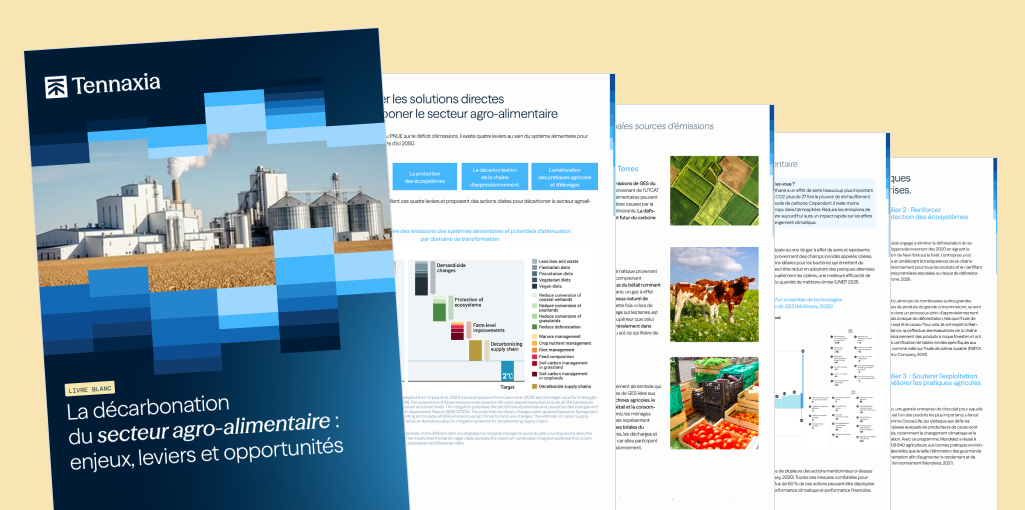
Decarbonizing the Agri-Food Sector: Challenges, Drivers, and Opportunities
The food system is at the heart of climate challenges. Today, it accounts for between 21% and 37% of global greenhouse gas emissions, encompassing agriculture, food processing, transportation, distribution, and consumption.
In the face of population growth, pressure on natural resources, and the increasing impacts of climate change, the transformation of the agri-food sector has become a major challenge for both businesses and public authorities.
However, this sector remains particularly complex. It relies on long value chains, close interactions between agriculture, industry, distribution, and consumption, and major economic and regional challenges. Successfully decarbonizing the sector therefore requires taking action on multiple fronts simultaneously throughout the food system.
This study will show you how :
- Identify the main sources of emissions in the food system, from land use to the supply chain
- Implement concrete measures to reduce carbon emissions, from shifts in demand to agricultural and industrial practices
- Draw inspiration from initiatives and best practices already implemented by major players in the agri-food sector
- Anticipating regulatory changes and stakeholder expectations amid the sector’s rapidly evolving landscape