
.svg)




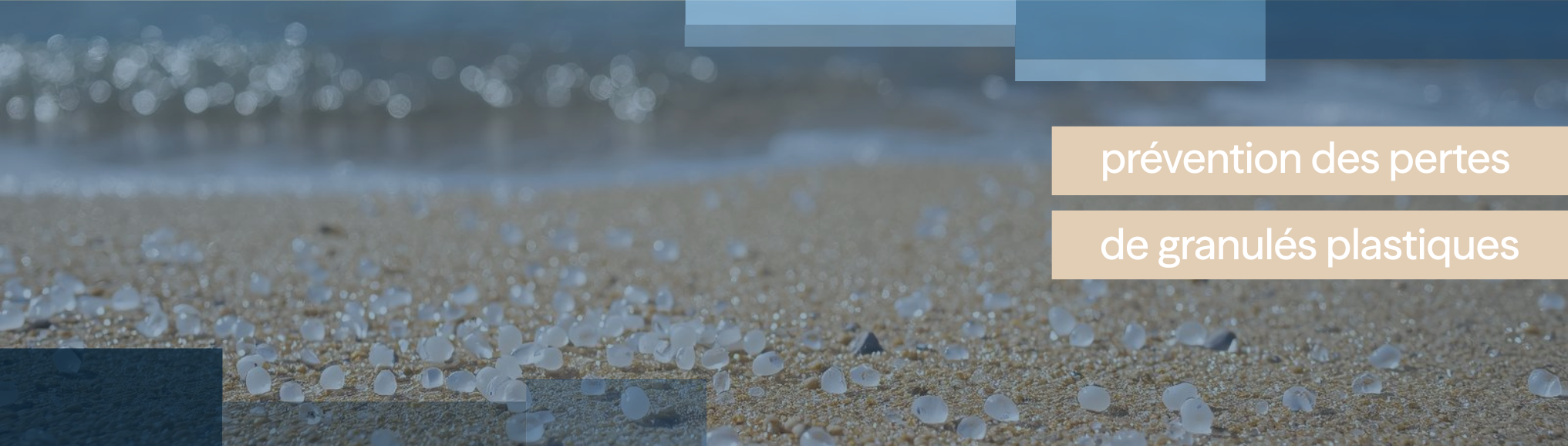



New European requirements apply to the handling and transport of plastic pellets, in order to prevent losses throughout the supply chain.
Plastic pellets, used as a raw material to manufacture most plastic products, are today widely dispersed during their transport and handling. According to the European Commission, they are the third-largest source of microplastic pollution in the European Union, with up to 184,000 tonnes lost each year, making them a major source of pollution.
In response to these concerns, and with the aim of protecting the environment and human health, Regulation (EU) 2025/2365 of 12 November 2025 imposes new requirements on economic operators and carriers, in order to prevent the loss of these plastic pellets throughout their supply chain.
More specifically, who is affected by this European Regulation
The requirements set out in this European Regulation concern:
- economic operators that have handled plastic pellets in the Union in quantities equal to or greater than a threshold of five tonnes during the previous calendar year;
- economic operators operating facilities in the Union for cleaning tanks and containers used for plastic pellets;
- EU carriers and third-country carriers responsible for transporting plastic pellets into the Union; and
- shippers, and operators, agents and masters of sea-going vessels transporting plastic pellets in containers that leave or call at a port of a Member State.
What are the main obligations for economic operators and carriers
The main requirements concern the following points:
- Preventing losses of plastic pellets
- Containing and immediately cleaning up any such losses
- If this fails, implementing corrective measures without delay
- Registering facilities with the competent authorities
- Drawing up a risk management plan for spills and losses
- Training staff responsible for handling or transporting pellets
- Keeping a record of the estimated quantities of losses each year and the total quantities of plastic pellets handled
- In the event of a loss, immediately informing emergency services, minimising the consequences, and providing the required information to the competent authorities within a maximum of 30 days
- In the event of non-compliance, informing the competent authority, restoring compliance as quickly as possible, and complying with any additional measures imposed by the competent authority
Additional obligations for the largest companies
Companies handling at least 1,500 tonnes of pellets per year must also comply with the following requirements:
- Obtaining a certificate of conformity from an accredited certifier, according to a timetable set based on the size of the company.
Note: Economic operators registered under the Community Eco-Management and Audit Scheme (EMAS) are exempt from the obligation to hold a certificate.
- Annual assessment of compliance with the risk management plan for large and medium-sized companies
- Renewal of the certificate every 3 years for large companies, and every 4 years for medium-sized companies. The smallest companies only need to renew their self-certification of conformity every 5 years.
Strengthened rules for maritime transport
Regarding container shipping, shippers must in particular ensure that packaging is of good quality and properly closed, and that transport information is provided to the operator, agent and master of the sea-going vessel before the pellets are loaded, along with a special stowage request.
Operators and masters of sea-going vessels must also ensure that containers are stowed below deck or on board in areas protected from exposed decks.
Other specific provisions
The regulation also sets out:
- the conditions for accrediting certifiers
- the information made available to the public by the competent authorities
- the arrangements for the competent authorities to verify compliance with the regulation
- the arrangements made for Member States to designate competent authorities and their powers
- the information and assistance made available to the public by the Commission
- the handling of complaints and access to justice
- penalties: administrative and financial penalties, with a maximum amount of at least 3% of annual turnover generated in the Union, as well as criminal penalties, may apply
- compensation in the event of harm to human health
Application deadlines
The regulation applies from 17 December 2027.
However, the following obligations apply from 16 December 2025:
- Preventing pellet losses and taking immediate measures to contain and clean up such losses
- Staff training
- Designation of one or more competent authorities by Member States
- Making awareness-raising and training materials available to the public online, by the Commission (this must be done by 17 December 2026 at the latest)
- Developing harmonised standards allowing pellet losses to be estimated, by the Commission (this must be requested by 17 December 2026 at the latest)
In addition, shippers, and operators, agents and masters of sea-going vessels are only affected by this regulation from 17 December 2028.
Note: the AGEC law and the GPI decree already provided for some of these provisions under French regulations.